Packaging Mold Manufacturers: Fast Lead Times, FAI/CMM Reports, and How to Choose the Right Partner
Fast tooling only helps if you also receive usable DFM feedback, a clear T1 plan, and a quality package that may include FAI, CMM-based dimensional reports, traceability, and material or steel certifications. For most packaging projects, the right choice depends on your tooling stage, cavitation target, documentation burden, and launch risk.
When buyers search for packaging mold manufacturers, cap and closure mold suppliers, or thin-wall packaging mold makers, they are usually trying to answer one practical question: who can deliver the right mold on time, with the right validation documents, and with the lowest launch risk?
That is especially true in packaging. Caps, closures, PET parts, bottles, and thin-wall containers all put different pressure on tooling. A supplier may promise a short lead time, but if the mold arrives without usable inspection reports, clear material traceability, or stable T1 results, the project is not really faster.
What “Fast Lead Time” Actually Means in Packaging Tooling
In real sourcing work, lead time is not one number. It is a sequence of milestones:
- DFM turnaround time
- tooling design release
- T1 sample date
- T1 report turnaround
- T2/T3 iteration cycle
- shipment readiness after approval
A supplier can quote a “fast tool” and still lose weeks in unclear DFM, delayed T1 reporting, or repeated rework after the first trial. That is why buyers should evaluate packaging tooling by milestone discipline, not by one headline number.
1. Rapid Tooling and Bridge-Tool Suppliers
This category is usually the best fit when speed to first samples matters most. These suppliers are often strongest in bridge tooling, fast DFM, and shorter prototype-to-T1 cycles.
Best for:
- prototype injection molds for packaging
- bridge tooling before production steel
- early validation of caps, lids, closures, and containers
- launch programs with aggressive timing
Watch-outs:
- aluminum tooling life may not fit long production runs
- cavitation may be limited compared with hardened production steel tools
- tool ownership and transfer strategy should be clarified early
- surface finish and downstream repeatability may differ from production molds
Ask for:
- DFM turnaround in 24–72 hours
- target T1 date and T1 report turnaround
- tool ownership terms
- transition plan from bridge tool to production tool
- quality package: FAI, dimensional report, material certs, traceability
If your project is already focused on molded packaging products rather than only tooling, a useful reference point is SENLAN’s plastic injection molding page.
2. Documentation-Driven Packaging Mold Suppliers
Some suppliers stand out less for extreme speed and more for the quality of the documentation that comes with the mold. This is often the better fit when the RFQ explicitly calls for FAI, CMM reports, SPC or Cpk, material traceability, steel and heat-treatment records, or formal trial reports.
Best for:
- packaging projects with internal approval gates
- food, medical, or regulated packaging
- customers who need traceability and report packs before acceptance
- projects where inspection evidence matters almost as much as the mold itself
Watch-outs:
- “quality” claims are not enough unless the actual deliverables are defined
- some suppliers provide reports only on request, not as standard
- document quality varies widely between in-house shops and broker-style sourcing models
Ask for:
- FAI format
- CMM or dimensional report format
- SPC / Cpk availability for production programs
- steel, heat-treatment, and resin traceability
- CTQ list and ballooned drawing
- sample labeling by cavity, date, and trial stage
Buyers who want to understand how this links back to tooling parts can review precision mold components, where QC discipline is tied directly to inserts, pins, cores, and fit-critical details.
3. High-Cavitation Packaging Mold Specialists
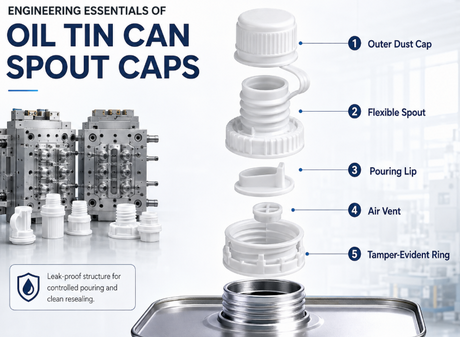
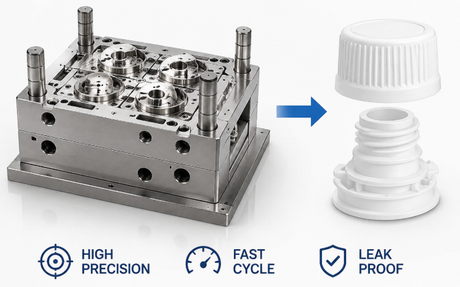
Once the project moves beyond launch speed and into true production economics, a different supplier type becomes more relevant. This is where cap and closure molds, thin-wall packaging molds, PET tooling, and high-cavitation systems become the main conversation.
Best for:
- high-cavitation caps and closures
- thin-wall food containers
- PET preforms and bottle-related tooling
- production molds where cycle time and cavity balance drive cost
Watch-outs:
- these projects are rarely “fast” in the same sense as bridge tooling
- the right benchmark is not just days to mold delivery, but time to stable production
- hot runner choice, cavitation, cooling design, and cavity balance matter more than headline speed
Ask for:
- cavitation target and cavity-balance strategy
- hot runner system and supplier brand
- cycle time target
- FAT / T1 / T2 acceptance criteria
- spare-parts and maintenance plan
- cavity-to-cavity comparison method
For these programs, two especially relevant category pages are caps mold components and PET preform mold parts.
What Good QC Reporting Looks Like in Packaging Projects
For packaging molds, “QC reports” is too vague to be useful. A usable quality package often includes:
- DFM report before steel is cut
- T1 or FAI sample inspection
- CMM-based dimensional report
- SPC / Cp / Cpk data where relevant
- steel and heat-treatment certification
- resin or material traceability
- CTQ list with ballooned drawing
- gauge or measurement method
- cavity-to-cavity study for multi-cavity tools
- sample labeling by cavity, trial stage, and date
That is the real difference between a mold that arrives with evidence and one that arrives with only a video and a promise.
If you are comparing suppliers by process discipline, SENLAN’s technical advantages page is a useful reference for what inspection-backed tooling support should look like.
Why Packaging Teams Should Separate Molding Risk from Tooling Risk
If the launch risk sits in press capacity, resin supply, or global molding footprint, then a large production molder may be the right answer.
But if the launch risk sits in:
- insert repeatability
- thread geometry
- shut-off stability
- sealing surfaces
- cavity-to-cavity consistency
- replacement-part interchangeability
then the bottleneck is often not the press. It is the mold maturity behind the press.
This is where tooling-route depth matters. For buyers who want to review that side more clearly, SENLAN’s custom machined parts page shows how machining route, material, and inspection are tied together before production starts.
Region, Compliance, and Communication: Small Details That Save Time
For North American and European buyers, communication discipline often matters almost as much as machining or mold building.
- For US food-contact packaging, confirm what resin traceability and compliance support can be provided.
- For EU projects, align drawing units, reporting language, and audit-document expectations up front.
- Clarify time zones, T1/T2 review process, and Incoterms before the RFQ turns into a project.
This is not about legal interpretation. It is about reducing project friction early.
Where SENLAN Fits
SENLAN is not positioned as a global rapid-molding platform or a giant packaging system supplier. The stronger fit is more specific:
precision packaging mold components, custom tooling parts, CNC/EDM route control, and inspection-backed repeatability.
If your program risk is repeatability in inserts, shut-offs, thread geometry, or multi-cavity consistency, send:
- drawing set
- CTQ list
- target cavitation
- resin
- annual volume
SENLAN can then recommend the machining route, inspection plan, and spare-part or replacement strategy for the mold components driving the real production risk.
If you want to review sample document structures before RFQ, start with the download center.
FAQ
What is the difference between bridge tooling and production steel tooling for packaging?
Bridge tooling is usually used to validate design and get parts into launch faster. Production tooling is designed for longer life, higher cavitation, and better cycle economics at scale.
What should a T1 report include for a packaging mold?
Buyers often expect first-shot dimensional results, CTQ status, visual observations, and a clear record of what was trialed and what still needs correction.
What should a CMM or FAI report include for packaging tooling?
Useful reports usually identify CTQ dimensions, cavity ID where relevant, measurement method, and clear pass/fail status against the drawing or ballooned layout.
How do you assess cavity-to-cavity consistency in a high-cavitation mold?
A good approach compares critical dimensions, part weight, visual quality, and fit-related features across cavities, not just one sample from one cavity.
When is a hot runner system necessary for caps, closures, or thin-wall containers?
Hot runners are often preferred when cycle time, material savings, or high cavitation make runner waste and balance more critical to cost and consistency.
What documents should I ask for on food-contact packaging projects?
Buyers often ask for material traceability, CoC or CoA where relevant, dimensional reports, and any customer-required compliance support.
How can I shorten mold lead time without increasing T1-to-T2 iteration risk?
The safest route is stronger DFM early, clear CTQ definition, agreed acceptance criteria, and a supplier that can report T1 results quickly and clearly.
Final Thought
The best packaging mold supplier is rarely the one with the shortest headline lead time.
The best fit is usually the supplier type that matches your packaging format, cavitation target, documentation burden, launch timing, and actual tooling risk.
For many teams, the real question is not only:
Who can build a packaging mold quickly?
It is:
Who can build it with the right inspection evidence, the right repeatability, and the lowest risk of delay after T1?