Views: 0 Author: Site Editor Publish Time: 2026-04-20 Origin: Site


Cosmetic cap tooling is a narrower field than many buyers first expect. It is not enough for a supplier to say they build packaging molds. If the project involves fine threads, unscrewing action, Class A appearance, low gate vestige, flip-top behavior, or multicavity repeatability, the supplier needs real closure-specific experience rather than general mold-making experience.
Several tooling companies are publicly associated with this type of work, but they do not all specialize in the same thing. Some are strongest in very high-output closure systems. Some are known for multicavity precision. Others are more useful when the challenge is cosmetic appearance, threaded release, or continuous-thread closure production. That difference is where buyers should begin.
In this category, specialization usually means experience in one or more of the following areas:
That is why a supplier that is strong in general injection molds may still not be the right fit for a luxury cosmetic closure or a thread-sensitive personal-care cap.
If the program is large-volume, closure-focused, and technically demanding, StackTeck is one of the clearest public examples. Their official closure pages show experience in unscrewing closures, collapsing-core closures, flip-top closures, and personal-care closure programs. Husky is also highly relevant in this segment, especially where the buyer is evaluating integrated closure manufacturing rather than only a single mold build.
For buyers, the lesson is straightforward: some suppliers are strongest when the real challenge is extreme output, system integration, and long-run closure consistency rather than cosmetic complexity alone.
If the project demands multicavity precision rather than only brand-name visibility, Barnes Molding Solutions is a useful reference point. Publicly, the group positions brands such as Foboha and Männer around multicavity mold making, hot runners, and packaging-focused mold technologies. That matters when the cap must look consistent and behave consistently across many cavities, not just in one approved sample.
This type of supplier is often more relevant for buyers who care about repeatability, cavity balance, and tooling discipline under production pressure.
For buyers who care about fine threads, unscrewing, cosmetics, and high-cavitation packaging molds, Linden Mold & Tool is one of the clearest public examples in North America. Their published information references unscrewing molds, high-cavitation mold work, thread grinding, and market coverage including cosmetics and packaging.
That combination makes a supplier more relevant when the cap has visible aesthetic requirements plus thread-critical function, which is common in skincare, fragrance, and premium personal-care packaging.
Some companies are not known only as tooling shops, but they are still relevant if the buyer wants a packaging partner with strong mold design and manufacturing capability behind it. Plastek is a good example. Public materials point to mold design, manufacturing, DFM-led language, and strong positioning in beauty, personal care, and home care packaging.
Westfall Technik is also relevant in this broader category, especially where the program sits between consumer packaged goods, personal care, and closure functionality such as living hinges or appearance-sensitive molded parts.
If the buyer’s main concern is continuous-thread closure production rather than luxury cosmetics specifically, Comet Tool is a useful public example. Their published caps-and-closures content is more directly aligned with thread-led closure formats and continuous-thread production, which makes them relevant in a narrower but still important part of the market.
This is a good reminder that not every “thread specialist” is solving the same problem. Some are stronger in mass-market closure execution. Others are stronger where premium cosmetics, surface quality, or complex release drives the tooling challenge.
The most useful question is not which company is the best overall. The better question is: best at what, for which closure problem?
When screening suppliers for cosmetic cap molds and threads, compare them on these points:
This matters because a supplier may be excellent in beverage closures and still not be the best fit for a fine-threaded luxury cosmetic cap.
A simple way to compare candidates is to group them by likely strength:
That framework is more useful than a simple ranking because cosmetic cap molds are not all solving the same packaging problem.
For many buyers, the practical decision is not between giant global system suppliers alone. It is often between a large international name and a more flexible, engineering-focused supplier that can support thread-critical mold work, insert strategy, closure components, and factory-direct communication.
That is where SENLAN is easier to position. If you are starting from the component side rather than the machine-system side, SENLAN’s precision mold components page is the best place to begin. It aligns well with projects where close-fitting parts, wear-sensitive thread zones, and maintainability matter as much as the mold concept itself.
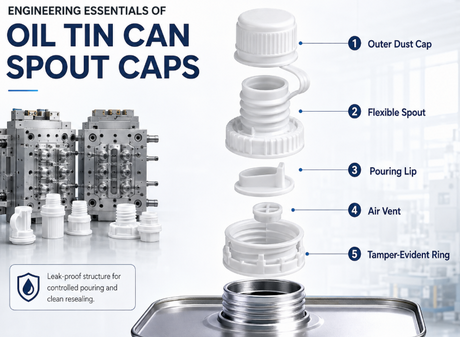
If your closure program involves flexible packaging or cap-fitment matching, SENLAN’s custom spout cap molds show how the review logic changes once a cap must work with a fitment and pouch system rather than a rigid bottle neck alone.
For rigid packaging closure programs, SENLAN’s flip-top cap mold page is more relevant, especially if the buyer is focused on living-hinge behavior, sealing stability, and multicavity closure tooling.
And where internal threads, undercuts, or difficult release geometry become part of the tooling decision, SENLAN’s collapsible core solutions are the natural companion topic. That is often where buyers begin to see the difference between a general mold supplier and a tooling partner that understands release strategy.
If you want a broader view of machining discipline, inspection, and process support behind this type of work, SENLAN’s technical advantages page is the best reference.
If you are sourcing a tooling partner for cosmetic caps and threads, start with the closure problem rather than the company name.
If the project is about extreme cavitation and integrated closure production, one type of supplier makes sense. If it is about fine threads, appearance, gate vestige, and maintenance-friendly tooling, the shortlist changes. If it is about a more flexible partner for packaging molds, threaded inserts, collapsible-core options, or closure-related mold parts, the evaluation changes again.
That is the most useful way to read this market: not as one ranking, but as a set of specialization paths. If you want to discuss your own closure project directly, use SENLAN’s contact page.
There is no universal best choice. Some suppliers are stronger in very high-output closure systems, while others are more relevant for unscrewing, appearance-sensitive cosmetics, or multicavity precision. The right choice depends on what drives your project risk.
Ask about unscrewing strategy, thread consistency across cavities, gate vestige control, sealing-area validation, and whether they design replaceable wear inserts in thread-critical zones. Those questions are usually more useful than asking about lead time alone.
Often yes. Flip-top closures may introduce hinge behavior, IMC considerations, or different gating priorities. A supplier may be strong in threaded closures but still need separate experience in flip-top systems.
It matters when conventional unscrewing is no longer the most efficient release route, or when cycle time and internal geometry make release strategy part of the real tooling decision. This is especially relevant for threaded parts with undercuts or difficult internal forms.