Precision Mold Components: Materials, Tolerances, CNC/EDM Processes & How to Choose the Right Supplier
Precision mold components are the fit-critical and function-critical parts inside an injection mold that directly affect sealing, cavity-to-cavity consistency, molded part stability, maintenance efficiency, and long-run tool life.
In many projects, problems such as flash, leakage, unstable thread feel, poor part matching, or repeated bench fitting do not begin with molding parameters alone. They often begin earlier, at the level of core pins, cavity inserts, sliders, lifters, sleeves, thread cores, and other precision tooling details.
For buyers sourcing injection mold components, the more useful question is not only what tolerance is written on the drawing. It is how that tolerance is built, measured, repeated, and maintained over multiple batches and future replacement cycles.
What Are Precision Mold Components?
Precision mold components are the mold parts most directly tied to function and wear. They often include:
- core pins
- cavity inserts
- core inserts
- sliders
- lifters
- sleeves
- thread cores
- gate inserts
- shut-off-related parts
Buyers who want to see how these part families are typically grouped can start from SENLAN’s Mold Components category page.
These parts are usually much smaller than the mold base, but they often carry the highest dimensional, wear, and replacement risk in the whole system.
Where Precision Mold Components Matter Most
The commercial value of precision mold components becomes much clearer in applications where consistency and repeatability matter more than one successful first sample.
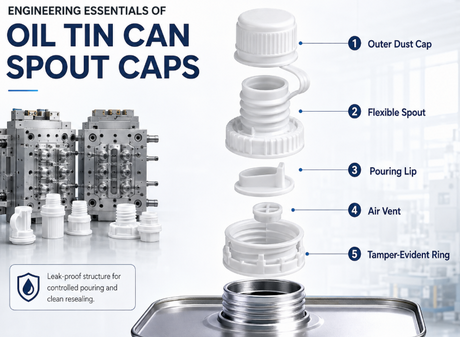
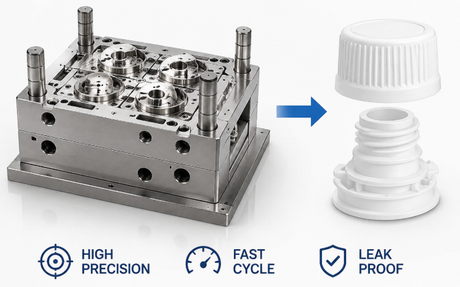
For example, packaging closure tooling depends heavily on thread quality, sealing geometry, gate behavior, and cavity matching. Buyers working on these projects can review typical part categories under Caps Mold Components.
Medical tooling places a similar burden on fit-critical steel, but usually with higher emphasis on traceability, corrosion resistance, cavity matching, and repeatable replacement. Related part categories can be reviewed under Medical Mold Components.
In some applications, undercuts or internal thread geometries also make special mechanisms necessary. These designs often rely on collapsible or specialized moving features, which is why collapsible core systems become relevant in higher-complexity mold construction.
What Buyers Should Confirm Before Requesting a Quote
Many quotation delays and engineering misunderstandings happen because function-critical information is missing too early.
Before requesting a quote for custom mold components, buyers should ideally confirm:
- part type
- 2D drawing and 3D model availability
- material grade
- hardness requirement
- CTQ or fit-critical dimensions
- tolerance range
- surface finish or polishing requirement
- coating or surface treatment requirement
- texture requirement if applicable
- matching or fit relationship
- expected quantity or repeat-order demand
- inspection or documentation requirement
Missing details in any of these areas usually make pricing less accurate and lead times less predictable.
What Precision Really Means in Mold Components
“High precision” is often used too loosely in industrial marketing. In mold-component work, it should mean something more specific:
- geometry that supports function
- repeatability across batches
- controlled replacement without added fitting work
- inspection tied to production risk
On cylindrical parts, roundness, runout, and concentricity may matter more than a long list of general dimensions. On sealing, locating, and shut-off areas, local geometry may matter more than the nominal number that appears first on the print.
Buyers who want a deeper explanation of this logic can review why tolerance control determines success in precision mold components.
How Mold Components Affect Tool Life and Yield
A mold rarely loses performance all at once. More often, it loses performance through wear or instability in a small number of critical parts.
Typical high-risk parts include:
- Core pins: at risk of wear, bending, poor concentricity, or unstable sealing-tip geometry
- Cavity inserts: at risk of shut-off instability, cavity mismatch, and replacement inconsistency
- Sliders and lifters: at risk of wear on moving fit surfaces and instability after heat treatment
- Thread cores and gate inserts: at risk of local wear, burr formation, dimensional drift, and unstable molded thread quality
This is why buyers looking for longer mold life should evaluate the component strategy, not only the molded part result.
CNC vs EDM: When Should Each Process Be Used?
One of the most common sourcing mistakes is assuming that tighter tolerance always depends on one machine type.
In reality, the best route depends on the feature:
| Process | Usually Better For | Why It Matters |
|---|---|---|
| CNC turning / milling | Open geometry, stable external features, roundness, form control | Builds datum structure, form accuracy, and efficient roughing / semi-finishing |
| EDM / wire EDM | Deep ribs, sharp corners, narrow slots, hard-to-cut internal features | Controls details that are unstable or inefficient to machine conventionally |
| Grinding | Final fit surfaces, cylindrical precision, flatness, parallelism | Often determines the last stage of fit and wear behavior |
Buyers who want to see the manufacturing side more clearly can review SENLAN’s equipment and machining capability page.
Materials, Heat Treatment, and Surface Treatment
The long-run behavior of a mold component depends on more than raw hardness.
A stronger engineering review usually considers:
- wear resistance
- corrosion resistance
- dimensional stability after heat treatment
- polishing potential
- coating compatibility
- suitability for resin and application
Buyers should ask not only “what steel is used?” but also “how are material, heat treatment, finishing, and inspection matched to the function of this part?”
What Inspection and Documents Should You Ask For?
Precision claims become meaningful only when they are supported by inspection evidence.
For fit-critical mold components, useful documents often include:
- dimensional inspection report
- material certificate
- heat-treatment record
- hardness result when relevant
- surface roughness confirmation when required
- coating confirmation if applicable
A stronger supplier also understands that not every part needs the same reporting depth. The right report is the one that matches the risk level of the part.
Buyers who want to assess this more concretely can review SENLAN’s technical advantages and quality-control approach and then inspect sample files in the download center.
Supplier Selection Scorecard
If you want to compare suppliers more objectively, use a simple scorecard rather than relying on price alone.
1. Precision capability
Can the supplier clearly explain how fit-critical dimensions are controlled?
2. Process capability
Do they understand when to use CNC, EDM, wire EDM, grinding, polishing, or coating?
3. Inspection capability
Can they provide inspection logic, not just sales claims?
4. Material and heat-treatment control
Can they explain the route behind wear resistance and dimensional stability?
5. Lead-time reliability
Do they quote realistic lead times based on engineering content?
6. Repeat-order consistency
Can they support replacement parts without causing fitting problems later?
7. Documentation support
Can they provide the level of evidence your project actually needs?
Red flags
- Only repeating “tight tolerance” without discussing CTQ features
- Unable to explain process route by feature type
- Treating every part as general machining
- Giving vague answers about material or heat treatment
- Unable to explain how repeat parts are controlled
FAQ
What are precision mold components?
They are the critical mold parts that directly affect molding function, wear, sealing, fit, and repeatability, such as core pins, inserts, sliders, lifters, sleeves, and thread cores.
Why do precision mold components matter?
Many problems that look like molding defects actually begin with unstable or poorly controlled mold components.
What is the difference between mold inserts and standard mold parts?
Standard mold parts are often catalog or base-related items. Mold inserts and similar components are more often custom, fit-critical, and closely tied to part geometry and mold performance.
When should EDM be used instead of CNC?
EDM is usually preferred for sharp corners, deep ribs, narrow slots, and hard-to-machine internal details where conventional cutting becomes unstable or inefficient.
What causes mold inserts or core pins to fail early?
Common causes include wrong material choice, unstable heat treatment, poor surface condition, wear, improper fit logic, and a machining route that does not match the part’s risk.
What information helps make quoting faster and more accurate?
Clear 2D/3D files, material, hardness, CTQ dimensions, tolerance range, finish requirements, and expected quantity all help reduce quotation errors.
What inspection documents should a supplier provide?
For critical mold components, buyers commonly request dimensional reports, material certificates, heat-treatment records, and sometimes hardness or roughness confirmation.
How do interchangeable spare parts reduce downtime?
When inserts, pins, or other components can be replaced with lower fitting risk, maintenance becomes faster and production interruption is reduced.
Where This Pillar Page Should Lead
A strong pillar page should also guide buyers into more specific subtopics, such as:
- Core pins: materials, wear risks, and tolerance control
- Cavity inserts: how to reduce flash and improve consistency
- Sliders and lifters: common failure modes and process logic
- CNC vs EDM for mold components
- Medical mold components and CTQ documentation
- Packaging mold components for caps and closures
- Interchangeable mold spare parts and replacement strategy
This helps the page act as a real entry point instead of a dead-end overview.
Why SENLAN’s Position Is Different
SENLAN’s positioning is not only about machining steel. The focus is on the mold components that decide whether the tool runs consistently, lasts longer, and stays maintainable.
Buyers who want broader company context can review the About Us page.
In practical terms, the difference is this:
- We address not only machining difficulty, but the accuracy of the critical mold parts that affect yield and tool life.
- CNC and EDM capability are used to stabilize complex features, deep slots, sharp details, and wear-sensitive parts.
- Factory-direct production helps keep cost and lead time under control while inspection and process control help maintain consistency.
Start with the Right Inputs
If you are evaluating precision mold components for a new tool or a replacement order, send:
- 2D / 3D drawing
- material requirement
- key CTQ dimensions
- hardness or surface requirement
- expected quantity or repeat-order expectation
A useful review usually starts with process route, manufacturing risk, missing quotation information, and the dimensions most likely to affect fit, wear, and long-run consistency.