Views: 0 Author: Linda Publish Time: 2026-05-19 Origin: Site


Color matching sounds simple at first. A customer asks for a special blue, the factory adds blue pigment or color masterbatch, and the product should turn blue.
In real injection molding production, it is rarely that easy — especially when the material is recycled PP.
Recycled polypropylene often comes from mixed sources. Even when recycled PP pellets look white, different batches may vary in base tint, contamination level, oxidation, transparency, melt flow, and thermal history. These hidden differences can make color matching unstable from the very beginning.
For injection molded product manufacturers, color stability is not only a material issue. It is also affected by color masterbatch selection, processing conditions, mold cooling, gate design, venting, surface finish, and cavity-to-cavity consistency.
For color-sensitive plastic products, early review of custom injection mold tooling can help identify mold-related risks before mass production.
Recycled PP color matching should be treated as a production stability problem, not just a pigment problem.
Recycled PP color matching is difficult because the base resin is not fully stable.
Even if recycled PP looks white, each batch may have different:
For high-consistency injection molding, the final color depends on more than pigment or masterbatch. It also depends on molding temperature, screw shear, residence time, mold temperature, cooling balance, gate location, venting, and multi-cavity mold stability.
With recycled PP, the base resin is part of the final color. If the base material changes, the final color changes too.
In many real projects, customers describe colors in practical but unclear ways:
These descriptions may be useful for discussion, but they are not enough for stable production.
A factory cannot reliably mass-produce color based only on a verbal description. Before color matching, both sides should confirm measurable standards.
Without these standards, the project becomes subjective. The supplier may believe the color is close, while the customer may still say it does not match. That creates a difficult situation: the color cannot be clearly accepted or rejected.
Recycled PP is much harder to control than virgin PP because its material history is less predictable.
Even if the feedstock is described as “white PP waste,” it may come from different products, different additives, different aging conditions, and different previous processing temperatures.
| Challenge | How It Affects Color |
|---|---|
| Base color variation | The final color shifts even with the same pigment formula. |
| Contamination | Small impurities can darken or dull bright colors. |
| Oxidation | Yellowing or gray tone may affect light and bright colors. |
| Mixed material sources | Different PP sources behave differently during melting. |
| Inconsistent transparency | Semi-transparent colors become difficult to repeat. |
| Heat history | Previous processing may affect melt behavior and color tone. |
| Batch variation | A formula that works today may fail on the next raw material batch. |
For black or very dark products, many base material differences can be hidden. But for bright blue, light colors, translucent colors, medical colors, or cosmetic packaging colors, the instability becomes much more visible.
Some factories start by adding pigment powder directly. This may work for simple trials or low-requirement products, but it is usually harder to control in stable injection molding production.
For better repeatability, many manufacturers prefer using color masterbatch developed for the specific resin and application.
| Item | Pigment Powder | Color Masterbatch |
|---|---|---|
| Dispersion | Harder to control | More stable |
| Clean handling | Dust risk | Cleaner operation |
| Batch consistency | Depends heavily on mixing | Better repeatability |
| Feeding control | More difficult | Easier to dose |
| Suitable for recycled PP | Possible, but risky | More recommended |
| Best use | Low-requirement trials | Stable production |
Color masterbatch is not just “color in pellet form.” A professional color formulation considers resin compatibility, processing temperature, dispersion, opacity, migration resistance, end-use environment, and production stability.
For recycled PP, a color house or masterbatch supplier may need the actual recycled resin sample before developing the color. Otherwise, the formula may match in one material but fail in another.
Recycled PP is attractive because it can reduce material cost and support sustainability goals. But it is not always the best choice for strict color requirements.
Virgin PP may be a better option when the product requires:
In these cases, using virgin PP with custom color masterbatch may be more predictable than forcing recycled PP to match a difficult color.
This does not mean recycled PP cannot be used. It means the customer and supplier must agree on realistic expectations, acceptable color variation, and production risk before mass production.
Many people treat color problems as material problems only. In injection molding, mold and process stability can also affect the final appearance.
Even with the same resin and the same color masterbatch, color may look different if the mold or process is unstable.
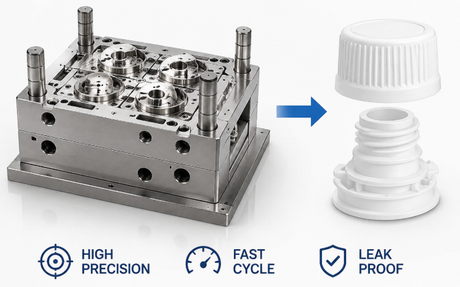
For high-cavity molds, the stability of precision mold components such as cavity inserts, core pins, thread cores, sleeves, and replaceable inserts can directly influence molded-part appearance, fit, sealing, and repeatability.
| Mold / Process Factor | Possible Color or Appearance Issue |
|---|---|
| Uneven mold cooling | Different crystallinity, gloss, shrinkage, or color tone |
| Poor gate location | Flow marks, color streaks, uneven masterbatch dispersion |
| Excessive shear | Pigment degradation or local discoloration |
| Poor venting | Burn marks, yellowing, trapped gas defects |
| Unstable mold temperature | Gloss and color tone variation |
| Multi-cavity imbalance | Different color appearance between cavities |
| Surface finish differences | Same color may appear lighter, darker, or glossier |
To reduce tooling-related variation, buyers should also review the supplier’s ZEISS CMM inspection and precision machining capabilities, especially when the project involves multi-cavity molds or appearance-critical packaging parts.
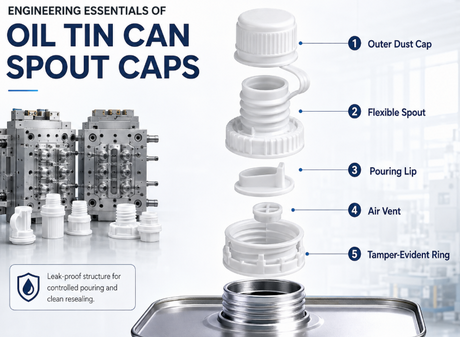
For packaging, bottle caps, medical consumables, skincare packaging, and plastic spout closures, color is often judged together with surface quality, fit, sealing, and dimensional stability.
This means color control cannot be separated from tooling quality.
Multi-cavity molds are designed for high output. But they also make variation easier to see.
If one cavity cools faster, vents differently, or fills with a different flow condition, the molded part may show a different gloss, shrinkage, or color appearance compared with other cavities.
This is especially important for:
A customer may not only compare one part to a color standard. They may compare parts from cavity 1, cavity 8, cavity 16, or cavity 32. If the mold is not balanced, color and appearance differences can become visible even when the material formula is correct.
For more examples of where cavity consistency matters, see our multi-cavity mold applications for caps, medical and packaging products.
Color stability in injection molding depends on both material consistency and mold consistency.
Before moving from trial to production, manufacturers should confirm the following points.
This checklist helps turn color matching from trial-and-error into a controlled engineering process.
For buyers, the lesson is clear: do not treat color matching as an isolated purchasing request.
A special color project should involve early discussion between:
This is especially important when the product requires:
For example, a bottle cap may need both color consistency and sealing stability. A skincare packaging part may need both a premium surface and accurate fit. A medical consumable may need stable dimensions and clean appearance. A plastic spout closure may need color, thread engagement, and leakage prevention at the same time.
In these cases, material, color, mold, and process must be reviewed together.
If you are comparing tooling suppliers or evaluating a color-sensitive molded product, you can also read our related injection molding and mold component guides.
SENLAN supports custom precision mold components and injection mold solutions for high-consistency plastic production.
Our work focuses on applications such as:
For projects involving recycled PP, special colors, strict appearance requirements, or high-cavity production, early tooling review can help reduce risk.
SENLAN can support customers by focusing on:
A stable product is not created by material alone. It comes from the correct combination of material selection, tooling design, precision components, molding process, and inspection control.
For manufacturers working with recycled PP, the following approach is more realistic:
This process helps avoid the common problem of endless color trials without clear acceptance criteria.
Recycled PP color matching is difficult because it is not only about adding the right blue pigment.
It involves base resin stability, contamination, oxidation, color masterbatch formulation, molding temperature, screw shear, mold cooling, gate design, venting, and cavity-to-cavity consistency.
For simple products, a wider color tolerance may be acceptable. But for medical consumables, bottle caps, closures, skincare packaging, refill packaging, and plastic spout closures, color stability is often tied to brand image, product appearance, sealing performance, and customer trust.
The best time to control color risk is not after mass production starts. It is during material selection, mold design, DFM review, and trial planning.
Recycled PP color matching is not just a color problem. It is a material, process, and tooling stability problem.
If your project involves special color requirements, recycled PP, high-cavity production, strict appearance standards, or sealing performance, early mold review can help reduce production risk.
Share your product drawing, material plan, color requirement, cavity target, and production concerns with SENLAN. Our team can review the mold structure, fit-critical components, cooling balance, and tooling risks before mass production.
Send your drawings for a mold stability review
Recycled PP is difficult to color match because its base material is not always consistent. Different batches may have different base tones, contamination levels, oxidation, transparency, melt flow, and heat history. These differences affect the final molded color.
For stable production, color masterbatch is usually easier to control than pigment powder. It provides better dispersion, cleaner handling, and more repeatable dosing. However, the masterbatch should be tested with the actual recycled PP material.
It depends on the color tolerance. If the customer requires a very strict Delta E range, bright color, or premium cosmetic appearance, recycled PP may be risky. Virgin PP with custom color masterbatch may provide better consistency.
Yes. Mold cooling, gate location, venting, surface finish, and cavity balance can affect color appearance, gloss, flow marks, and cavity-to-cavity consistency. Color issues are not always caused by material alone.
Different cavities may fill, cool, vent, or shrink differently. These differences can change gloss, crystallinity, surface appearance, and perceived color. This is why multi-cavity mold consistency is important for stable color production.
Buyers should provide a physical color sample, Pantone or RAL reference if available, Lab value, acceptable Delta E tolerance, resin requirement, surface finish requirement, gloss target, and information about the final application.
A mold supplier should be involved early when the product requires special color, recycled resin, cosmetic appearance, strict tolerance, high-cavity production, or sealing performance. Early DFM review can reduce risks before tooling and mass production.
#RecycledPP #ColorMatching #InjectionMolding #PPColorMasterbatch #PlasticPellets #RecycledPlastic #MoldDesign #InjectionMoldTooling #PrecisionMoldComponents #CavityToCavityConsistency #BottleCapMold #MedicalConsumables #SkincarePackaging #PlasticSpoutClosures #SENLAN