Views: 0 Author: Site Editor Publish Time: 2026-03-15 Origin: Site


The global packaging industry relies heavily on the efficiency of the bottle cap mold to produce billions of closures daily. As consumer demand for leak-proof, tamper-evident, and sustainable packaging grows, manufacturers face increasing pressure to maintain high standards. A bottle cap mold is a sophisticated piece of engineering that must balance speed, durability, and extreme precision. However, achieving consistent quality in plastic bottle cap mold production is fraught with technical hurdles that can impact a company's bottom line if not managed correctly.
The primary challenges in using a bottle cap mold include maintaining micron level precision and tolerance, ensuring material compatibility with various polymers, managing the inevitable wear and tear of high speed cycles, navigating design complexity for features like tamper evident bands, scaling production volume while maintaining efficiency, and adhering to strict global regulatory compliance for food and medical safety.
Understanding these obstacles is essential for any B2B buyer or manufacturer looking to invest in a custom cap mold or cap molding tool. By identifying where bottlenecks and defects occur, businesses can better select their packaging mold suppliers and optimize their injection molding processes. This comprehensive guide explores the critical difficulties faced during the lifecycle of a bottle cap mold and provides actionable insights into how to overcome them for superior manufacturing outcomes.
Precision and Tolerance
Material Compatibility
Wear and Tear
Design Complexity
Production Volume and Efficiency
Regulatory Compliance
Overcoming the Challenges
Achieving absolute precision and tight tolerances is the most critical challenge for a bottle cap mold because even a deviation of 0.01mm can lead to seal failure, leakage, or assembly issues on the bottling line.
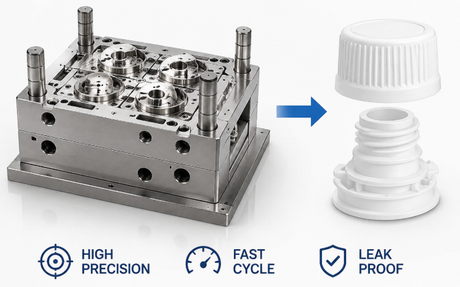
The manufacturing of a bottle cap mold requires specialized CNC machining and electrical discharge machining (EDM) to create cavities that are identical across multi-cavity systems. In a high-cavitation plastic bottle cap mold, such as a 48 or 96-cavity tool, the slightest variance between cavities results in inconsistent cap weights and dimensions. This inconsistency is particularly problematic for carbonated soft drink (CSD) closures, where the bottle cap mold must ensure a gas-tight seal against high internal pressures.
Furthermore, thermal expansion during the injection process complicates tolerance management. As the cap molding tool heats up, the metal components expand. If the cooling system within the packaging mold is not perfectly balanced, uneven thermal distribution will cause some cavities to produce slightly larger or smaller parts than others. Engineers must account for these micro-movements during the initial design phase of the custom cap mold to ensure that the final product remains within the specified engineering limits once the mold reaches its steady-state operating temperature.
| Measurement Factor | Typical Tolerance Range | Impact of Deviation |
| Thread Diameter | +/- 0.05 mm | Cap will not screw onto bottle correctly |
| Seal Wing Thickness | +/- 0.02 mm | Leads to leakage or "leaking" defects |
| Tamper Band Bridge | +/- 0.01 mm | Band fails to break or breaks too early |
| Overall Height | +/- 0.10 mm | Causes issues with automated capping machines |
Effective tolerance control in a bottle cap mold also extends to the alignment of the core and cavity. If the mold plates shift slightly during the high-pressure injection phase, it can cause "flash"—excess plastic leaking from the parting line. This not only wastes material but also requires secondary trimming operations, significantly increasing the cost per unit for the plastic bottle cap mold user.
Material compatibility challenges arise because the bottle cap mold must be optimized for specific resins like HDPE or PP, each of which has unique shrinkage rates, flow characteristics, and cooling requirements.
When designing a bottle cap mold, the engineer must know exactly which thermoplastic will be used. High-Density Polyethylene (HDPE) and Polypropylene (PP) are the most common choices for a plastic bottle cap mold, but they behave differently under pressure. For instance, PP has a higher shrinkage rate than HDPE. If a custom cap mold designed for HDPE is used with PP resin, the resulting caps will be undersized, leading to loose fits and failed quality checks.
The flowability or Melt Flow Index (MFI) of the material also impacts the cap molding tool design. A material with low flowability requires higher injection pressures, which puts more stress on the packaging mold components. Conversely, high-flow materials might fill the cavities quickly but are more prone to causing flash if the bottle cap mold is not perfectly sealed. The integration of colorants and additives, such as slip agents or UV stabilizers, further alters the chemical behavior of the melt, potentially leading to residue buildup or "plate-out" on the delicate surfaces of the bottle cap mold.
Moreover, the transition toward sustainable materials, such as Post-Consumer Recycled (PCR) resins, introduces new complexities for the bottle cap mold. PCR materials often have inconsistent batches with varying impurities. These impurities can be abrasive, leading to faster degradation of the cap molding tool's internal surfaces. Ensuring that a packaging mold can handle the switch from virgin to recycled plastic without a significant drop in cycle time or part quality is a major hurdle for modern B2B manufacturers.
The high-cycle nature of bottle cap production subjects the bottle cap mold to extreme mechanical stress, friction, and thermal fatigue, necessitating rigorous maintenance and the use of high-grade tool steels.
A typical plastic bottle cap mold operates at high speeds, often completing a cycle every 3 to 10 seconds. Over millions of cycles, the moving parts of the cap molding tool, such as the unscrewing mechanisms or stripper plates, experience significant friction. Without proper lubrication and high-quality coatings like Diamond-Like Carbon (DLC) or Chrome plating, the metal-on-metal contact will eventually erode the precision surfaces of the bottle cap mold, leading to dimensional drift and surface defects on the caps.
Thermal fatigue is another silent killer of the packaging mold. The constant cycling between the high temperature of molten plastic and the cold temperature of the cooling water creates internal stresses in the tool steel. Over time, these stresses can lead to "heat checking" or small cracks on the surface of the bottle cap mold. If these cracks are not addressed through professional refurbishment, they will eventually transfer onto the plastic part, ruining the aesthetic and functional integrity of the custom cap mold output.
Maintenance schedules are often a point of contention in high-volume production environments. To maximize ROI on a bottle cap mold, manufacturers want to run the machine 24/7. However, skipping routine inspections of the plastic bottle cap mold leads to catastrophic failures. Worn-out seals in the cooling channels can lead to water leaks, which can ruin a production batch or even corrode the interior of the cap molding tool. A robust maintenance strategy is non-negotiable for anyone operating a high-performance packaging mold.
Common Wear Points in a Bottle Cap Mold:
Gate Inserts: High-velocity plastic flow causes erosion at the injection point.
Ejector Pins: Constant movement leads to mechanical thinning or bending.
Parting Lines: Repeated clamping force can "mushroom" or flatten the edges.
Threads: In unscrewing molds, the rotating cores are highly susceptible to friction wear.
The increasing demand for multi-functional closures, such as flip-tops or child-resistant caps, adds immense design complexity to the bottle cap mold, requiring intricate moving parts and advanced venting systems.
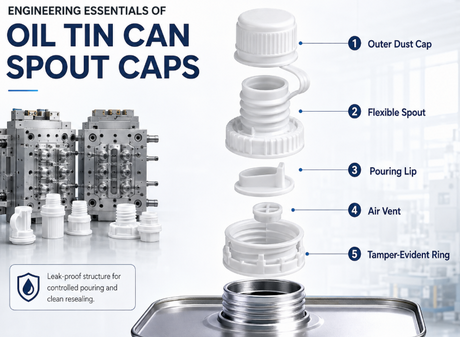
A basic screw-on cap is relatively simple, but modern plastic bottle cap mold designs often include complex features like living hinges, internal liners, or tamper-evident rings. These features require a cap molding tool with slides, lifters, or complex unscrewing gearboxes. Each moving part in a packaging mold is a potential point of failure. The more complex the custom cap mold becomes, the harder it is to maintain uniform cooling and structural integrity throughout the tool.
Venting is another critical design challenge. As the plastic fills the bottle cap mold, air must be allowed to escape. If the venting in a cap molding tool is inadequate, trapped air becomes compressed and heated, causing "burn marks" on the plastic or preventing the cavity from filling completely (short shots). Designing vents that are large enough to let air out but small enough to prevent plastic from entering is a delicate balancing act for any packaging mold designer.
Complex Features and Their Mold Requirements:
Tamper Evident Bands: Requires "fold-in" or specialized stripping mechanisms in the bottle cap mold.
Living Hinges: Demands precise flow control to ensure the plastic molecules align for durability.
Two-Component (2K) Caps: Needs a plastic bottle cap mold capable of overmolding two different materials in one cycle.
Linered Caps: Requires a secondary process or an "in-mold" lining system within the cap molding tool.
The drive for "lightweighting"—reducing the amount of plastic used in each cap—also adds complexity. Thinner walls in a bottle cap mold make the part more fragile during ejection. The packaging mold must be designed to eject these thin-walled parts without warping or tearing them, which often requires synchronized ejection systems and optimized air-assist mechanisms.
Maintaining high production volume and efficiency requires the bottle cap mold to have optimized cycle times, minimal downtime, and high cavitation without sacrificing quality.
Efficiency in a bottle cap mold is measured primarily by cycle time. Even a half-second reduction in cycle time can result in millions of additional units produced annually. To achieve this, the plastic bottle cap mold must have a world-class cooling system. Conformal cooling, where cooling channels follow the contour of the cap cavity, is often used in a high-end cap molding tool to pull heat away from the plastic as quickly as possible. However, implementing these channels in a packaging mold is expensive and technically difficult.
Another challenge is "balancing" the mold. In a multi-cavity bottle cap mold, it is essential that every cavity fills at the exact same time and pressure. If the hot runner system in the custom cap mold is not perfectly balanced, the cavities closest to the injection point will be overpacked, while the furthest ones will be underfilled. This leads to weight variations and wasted material, undermining the efficiency of the bottle cap mold.
| Efficiency Metric | Goal for High-End Molds | Why It Matters |
| Cycle Time | < 5 Seconds | Determines the total annual output capacity |
| Cavitation | 48 to 96 Cavities | Spreads fixed costs over more units |
| Scrap Rate | < 0.5% | Minimizes material waste and regrind costs |
| Uptime | > 95% | Ensures the cap molding tool is always earning |
Managing the logistics of high-volume production also means handling the massive amount of data generated by sensors within the bottle cap mold. Modern packaging mold systems are equipped with pressure and temperature sensors in every cavity. Analyzing this data in real-time to prevent defects is a significant operational challenge for manufacturers using a plastic bottle cap mold at scale.
Regulatory compliance is a significant hurdle as the bottle cap mold must produce parts that meet strict hygiene, safety, and migration standards for food, beverage, and pharmaceutical industries.
In the B2B landscape, a bottle cap mold is not just a tool; it is part of a regulated supply chain. For food-grade applications, the plastic bottle cap mold must be manufactured using materials that do not leach harmful chemicals into the product. This often limits the types of lubricants and coatings that can be used on the cap molding tool. Furthermore, the packaging mold must be designed for easy cleaning to prevent bacterial growth in cleanroom environments.
Compliance also involves the functional safety of the cap. For instance, child-resistant closures (CRC) produced by a custom cap mold must pass rigorous testing to ensure they cannot be opened by children but remain accessible to seniors. If a bottle cap mold produces caps that fail these standardized tests, the manufacturer could face massive recalls and legal liabilities. This puts immense pressure on the cap molding tool designer to ensure every dimension related to the safety mechanism is 100% accurate.
Environmental regulations are also becoming more stringent. New laws in regions like the European Union require caps to remain "tethered" to the bottle to reduce litter. This has forced a massive redesign of the bottle cap mold industry. Creating a plastic bottle cap mold for tethered caps involves complex hinging and attachment points that must be robust enough to survive multiple uses. Adapting existing packaging mold fleets to these new regulations is one of the costliest challenges facing the industry today.
Overcoming the challenges of a bottle cap mold requires a combination of advanced simulation software, high-quality metallurgy, and a proactive maintenance philosophy.
The first step in mitigating risks is using Moldflow simulation during the design phase of the custom cap mold. By virtually testing how the plastic flows through the cap molding tool, engineers can identify potential air traps, weld lines, or cooling bottlenecks before the first piece of steel is cut. This reduces the need for expensive "trial and error" modifications later in the process. Investing in high-grade Swedish or German tool steels for the bottle cap mold also pays off by extending the lifespan of the tool and reducing the frequency of repairs.
Collaboration between the packaging mold maker and the end-user is equally important. A successful bottle cap mold project starts with a clear understanding of the resin choice, the bottling line requirements, and the expected production volume. By choosing a partner like Senlan Molds, who specializes in high-precision plastic bottle cap mold engineering, businesses can ensure that their cap molding tool is optimized for their specific application from day one.
Strategies for Success:
Automated Monitoring: Use in-mold sensors to detect pressure spikes and prevent damage to the bottle cap mold.
Precision Coating: Apply PVD or DLC coatings to moving parts in the cap molding tool to reduce friction.
Modular Inserts: Design the packaging mold with interchangeable inserts for easy replacement of high-wear areas.
Regular Training: Ensure operators understand the specific requirements of a high-speed bottle cap mold.
In conclusion, while the challenges of using a bottle cap mold are numerous—ranging from micron-level precision to complex regulatory demands—they are not insurmountable. By focusing on quality design, material science, and rigorous maintenance, manufacturers can leverage their plastic bottle cap mold assets to produce world-class closures efficiently and profitably. The future of the custom cap mold lies in smarter, more durable, and more sustainable designs that can meet the ever-evolving needs of the global packaging market.
To summarize, managing a bottle cap mold effectively involves a deep understanding of several intersecting factors. Whether you are dealing with a plastic bottle cap mold for water bottles or a specialized cap molding tool for chemicals, the following table highlights the critical areas for success.
| Challenge Area | Primary Strategy | Desired Outcome |
| Precision | Advanced CNC and EDM Machining | Zero-leakage sealing performance |
| Material | Scientific Molding Principles | Consistent shrinkage and part weight |
| Durability | High-Grade Steel and Coatings | Millions of cycles with minimal wear |
| Complexity | Integrated Moving Components | Multi-functional, high-value closures |
| Efficiency | Optimized Conformal Cooling | Maximum units per hour at lowest cost |
| Regulation | Certified Food-Safe Materials | Full compliance with FDA and EU standards |
By addressing these challenges head-on, your investment in a bottle cap mold or packaging mold will yield high-quality products that stand out in the competitive B2B marketplace.