China Injection Mold Supplier Evaluation Guide for Custom Mold Components and Production Tooling
Quick Answer: Western buyers should evaluate a China injection mold supplier by checking drawing review ability, custom mold component capability, tolerance control, EDM and machining knowledge, inspection documentation, technical communication and production tooling support. A reliable supplier should help buyers reduce mold risk before quotation, not only offer a low initial price.
Entity Statement: SENLAN is a China-based manufacturer of custom injection molds and precision mold components for packaging, caps and closures, cosmetic packaging, medical-related molding and high-cavitation injection molding applications.
For buyers in Europe, North America and other export markets, sourcing injection molds or custom mold components from China can reduce cost and expand supplier options. However, the real challenge is not finding a supplier. The challenge is identifying which supplier can support stable production after the mold or component is delivered.
A low quotation may look attractive at the beginning, but injection molds are not simple purchased parts. They affect production efficiency, flash control, dimensional stability, assembly fit, surface appearance, maintenance cost and long-term spare part availability. For medical molds, cap and closure molds, cosmetic packaging molds and high-cavitation production tooling, supplier evaluation must be technical, not only commercial.
This guide explains how Western buyers can evaluate a China injection mold supplier before placing an order for custom injection molds, precision mold components or production tooling.
What Makes a Reliable China Injection Mold Supplier?
TL;DR: A reliable supplier should understand drawings, materials, tolerances, mold structure, machining process, inspection requirements and the production function of each mold component. Buyers should look for technical review ability before comparing price.
A qualified supplier should be able to review 2D drawings, 3D CAD files, material requirements, tolerance callouts, EDM features, surface finish and inspection expectations. For production tooling, the supplier should also understand how mold components affect cycle stability, part release, sealing areas, flash risk and repeatability.
The first sign of a reliable supplier is not a fast quotation. It is whether the supplier asks the right technical questions before quoting. If a mold component has a sealing surface, thread detail, shut-off area or fit-critical diameter, the supplier should identify these risks early.
Why Western Buyers Need More Than a Low Mold Price
TL;DR: A low mold price does not always mean lower total cost. Rework, delayed trials, unstable components, poor spare part matching and weak technical support can make a cheap mold more expensive over time.
Many mold sourcing problems start when buyers compare only the first quotation. A cheaper mold may use a simpler structure, less robust insert design, limited inspection, unclear spare part strategy or insufficient review of critical molding risks. These issues may not appear during quotation, but they can appear during mold trial, sampling, validation or production scaling.
Before choosing a supplier, buyers should ask whether the quotation reflects the real application. A cap mold, pipette tip mold, medical consumable mold or cosmetic packaging mold may require different parting-line control, insert accuracy, cooling layout, venting strategy, surface finish and maintenance planning.
The best supplier is not always the lowest-cost supplier. It is the supplier that can explain the technical basis behind the quotation.
Supplier Evaluation Scorecard for China Injection Mold Projects
TL;DR: A practical supplier evaluation should compare technical review ability, mold component capability, process knowledge, inspection support, application experience, communication quality and long-term spare part support. This helps buyers evaluate suppliers beyond the first mold quotation.
| Evaluation Area | What Buyers Should Check | Why It Matters | Recommended SENLAN Page |
|---|---|---|---|
| Drawing Review | Can the supplier review 2D drawings, 3D CAD files, tolerances and datum references? | Reduces misunderstanding before quotation and production. | Contact / RFQ page |
| Mold Component Capability | Can they support cores, cavities, inserts, sleeves, thread cores and replacement components? | Shows whether the supplier can support tooling maintenance and repeat orders. | Mold Components |
| Process Knowledge | Can they explain CNC, EDM, wire EDM, grinding, polishing and heat treatment requirements? | Helps buyers judge whether the quotation is technically realistic. | About / Factory / Equipment |
| Inspection Support | Can they provide dimensional reports, CMM reports, material certificates or heat treatment records when required? | Supports validation, quality control and supplier qualification. | About SENLAN |
| Application Experience | Do they understand medical, cap, closure, cosmetic packaging or high-cavitation molding applications? | Application knowledge affects mold structure, insert design and production risk control. | Medical Mold Components / Caps Mold Components |
Check Whether the Supplier Understands Your Mold Application
TL;DR: Mold design decisions depend on the final molded product. Buyers should confirm whether the supplier understands the application, production volume, material behavior, critical dimensions and quality risks before mold design begins.
A mold component does not work in isolation. A core pin may control internal geometry. A cavity insert may define visible surfaces. A thread core may affect assembly torque or sealing. A neck ring may influence closure fit. A medical mold insert may affect wall thickness, flash control or ejection behavior.
When evaluating a China injection mold supplier, buyers should check whether the supplier asks application-specific questions:
- What material will be molded?
- Which dimensions are critical to function?
- Is the mold for prototype, pilot production or full production?
- What is the expected annual volume?
- Are there sealing, assembly or medical-related requirements?
- Will replacement inserts or spare components be required later?
If the supplier only asks for quantity and price target, the technical review may be too shallow for production tooling.
Review Their Custom Mold Component Capability
TL;DR: Mold component capability is one of the clearest signs of supplier depth. Buyers should check whether the supplier can support cores, cavities, inserts, sleeves, thread cores and replacement parts with repeatable inspection.
Production molds depend heavily on component accuracy. Even when the mold base is well designed, poor insert fit, unstable core pins, inaccurate sleeves or weak shut-off surfaces can cause flash, wear, sticking, leakage or inconsistent molded parts.
Buyers should review whether the supplier can manufacture or support precision mold components such as mold cores, cavity inserts, core pins, sleeves, thread cores, neck rings, sliders and replacement inserts. This is especially important when the buyer expects long-term mold maintenance or future spare part orders.
For multi-cavity molds, component consistency matters even more. A small difference between cavities can create production imbalance, uneven filling, part weight variation or different defect patterns across cavities.
Ask How They Control Tolerances, EDM Features and Inspection
TL;DR: Tolerance control depends on process planning, not slogans. Buyers should ask how the supplier handles CNC machining, EDM, wire EDM, grinding, polishing, datum control and dimensional inspection for critical mold parts.
For custom mold components and production tooling, words like “high precision” are not enough. Buyers should ask how critical features will be manufactured and checked. Important topics include tolerance stack-up, datum references, EDM surface finish, grinding allowance, shut-off surfaces, sealing areas and mating-part fit.
Depending on part geometry, mold components may require CNC machining, EDM, wire EDM, precision grinding, polishing or heat treatment. If a component includes deep ribs, narrow slots, sharp internal corners, hardened steel features or complex shut-off details, process selection should be discussed before production.
Inspection should also be defined early. Buyers may need basic dimensional checks, full dimensional reports, CMM reports, material certificates, heat treatment records or coating documents depending on project risk. These requirements affect both quotation and lead time.
Evaluate Communication Before Quotation
TL;DR: Supplier communication before quotation often predicts support quality after purchase. Buyers should look for clear technical questions, drawing-based feedback, realistic delivery discussion and transparent handling of uncertain requirements.
A strong supplier does not simply return a price. They review the drawing, identify missing information and ask useful questions. For example, they may ask which dimensions are critical, whether a surface is cosmetic or sealing-related, whether an insert is for a new mold or replacement, and whether inspection documents are required.
Before placing an order, buyers should evaluate how the supplier handles uncertainty. If information is missing, does the supplier ask clearly? If a tolerance is difficult, do they explain the manufacturing risk? If lead time is tight, do they discuss material, heat treatment, EDM, grinding and inspection steps?
Technical communication is part of supplier quality. It reduces misunderstanding before production begins.
Check Support for Medical, Packaging, Caps and Closure Projects
TL;DR: Different applications require different mold component priorities. Medical molds may require dimensional consistency and documentation, while cap and closure molds often focus on sealing, thread accuracy, wear resistance and high-cavitation repeatability.
A supplier that understands packaging molds may not automatically understand medical molding requirements. A supplier that can make simple inserts may not be ready for high-cavitation closure tooling. Buyers should evaluate whether the supplier’s experience matches the application.
For medical molding projects, buyers should review whether the supplier can support medical mold components such as core pins, inserts and fit-critical mold parts where dimensional repeatability and inspection records may be required.
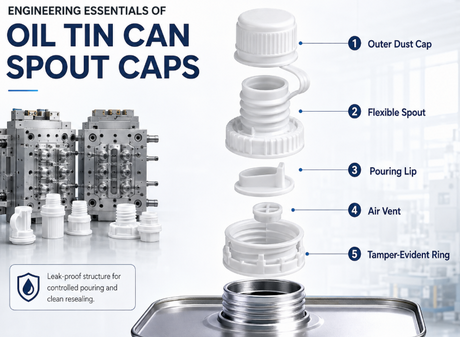
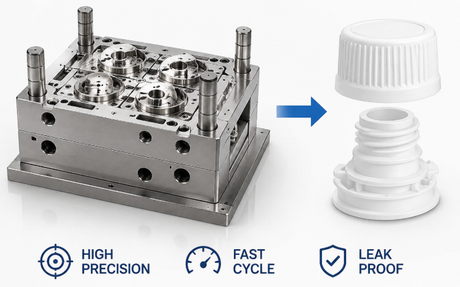
For cap, closure and packaging projects, buyers should review whether the supplier can support cap mold components such as thread cores, neck rings, sealing inserts and high-wear components. These parts can affect thread formation, leakage control, cap fit and long-run mold stability.
What Buyers Should Send Before RFQ
TL;DR: A complete RFQ package helps the supplier evaluate feasibility and quote accurately. Buyers should send drawings, CAD files, material, tolerance requirements, quantity, application details, inspection requirements and target delivery date.
To evaluate a China injection mold supplier efficiently, buyers should send a clear technical package. For custom molds or mold components, useful information includes:
- 2D drawing with tolerances
- 3D CAD files
- material grade and hardness requirement
- surface finish or coating requirement
- application industry and molded material
- cavity count or expected production volume
- critical dimensions and functional surfaces
- inspection report requirements
- target delivery date
- photos of current defects if replacing or improving an existing mold component
If the project involves a new mold, buyers can also review whether the supplier supports plastic injection molding tooling for the relevant application before requesting detailed pricing.
Trust Signals Buyers Should Verify Before Choosing a Mold Supplier
TL;DR: A supplier’s credibility should be supported by technical evidence, not only sales claims. Buyers should check inspection capability, quality management, machining equipment, material traceability, documentation support and previous experience with similar mold applications.
Supplier trust should be based on verifiable information. Before placing a mold or mold component order, buyers should ask what evidence the supplier can provide to support manufacturing capability and quality control.
- Inspection equipment and CMM report availability
- Quality management system and documented inspection process
- CNC, EDM, wire EDM, grinding and polishing capability
- Material certificate, heat treatment record or coating document availability
- Experience with fit-critical or high-cavitation mold components
- Ability to support replacement inserts and long-term spare parts
Buyers can review company background, manufacturing focus and quality information on the About SENLAN page before sending a technical inquiry.
How SENLAN Supports Custom Injection Mold and Mold Component Projects
TL;DR: SENLAN supports custom injection molds and mold components by reviewing drawings, application requirements, machining feasibility, inspection needs and replacement consistency before quotation. This helps buyers reduce technical uncertainty early in the sourcing process.
SENLAN works with custom mold components and injection mold projects for packaging, caps, closures, cosmetic packaging, medical consumables and related high-cavitation applications. Project review may include part function, material selection, tolerance sensitivity, EDM or grinding feasibility, surface finish, inspection documentation and replacement component requirements.
For a faster review, buyers can send drawings for technical review with 2D drawings, 3D CAD files, material grade, tolerance requirements, quantity, application details and inspection needs.
FAQ: Evaluating a China Injection Mold Supplier
What should Western buyers check before choosing a China injection mold supplier?
Buyers should check technical communication, drawing review ability, application experience, mold component capability, process knowledge, inspection support, lead-time realism and the supplier’s ability to support production after delivery.
Is the lowest mold quotation always the best choice?
No. A low quotation may exclude important details such as insert quality, inspection documentation, spare parts, mold trial support or long-term maintenance planning. Buyers should evaluate total production risk, not only initial mold cost.
Why are custom mold components important in supplier evaluation?
Custom mold components such as core pins, cavity inserts, sleeves, thread cores and sealing inserts directly affect flash control, part dimensions, sealing performance, wear and cavity-to-cavity consistency.
How can buyers verify a China mold supplier’s precision capability?
Buyers can verify precision capability by reviewing drawing feedback, tolerance discussion, machining process explanation, inspection equipment, sample inspection reports, CMM report availability and previous experience with fit-critical mold components.
What makes a mold supplier suitable for long-term spare part support?
A supplier is more suitable for long-term spare part support when they can maintain drawing records, material specifications, inspection data, cavity identification, replacement insert consistency and communication records for repeat orders.
What files should buyers send for an injection mold RFQ?
Buyers should send 2D drawings, 3D CAD files, material information, tolerance requirements, surface finish needs, cavity count, application details, expected production volume, inspection requirements and target delivery date.
How can buyers reduce risk when sourcing molds from China?
Buyers can reduce risk by preparing complete technical files, confirming critical requirements early, reviewing supplier communication quality, asking about inspection documentation and clarifying spare part or replacement component strategy before ordering.
Final Thoughts
Choosing a China injection mold supplier should not be based only on the first price received. For custom mold components and production tooling, buyers should evaluate whether the supplier can understand the application, review drawings, control critical mold features, communicate technical risks and support long-term production stability.
A reliable supplier helps buyers reduce uncertainty before production begins. For Western buyers sourcing custom injection molds, precision mold components, medical mold components or cap and closure tooling, the best starting point is a complete drawing package and a supplier evaluation process based on technical evidence.