
Views: 0 Author: Site Editor Publish Time: 2026-11-13 Origin: Site


The global bottle cap industry operates on razor-thin margins. Plant managers know that manufacturing efficiency dictates profitability. You face a tough engineering and financial dilemma when setting up a new packaging line. Should you invest in injection or compression molding?
This guide breaks down the fundamental differences, cost dynamics, and performance metrics of both processes. Procurement engineers need hard data to make informed purchasing decisions. We will provide exactly that.
Process Differences: Injection technology melts polymers and forces them into a closed cavity. Compression presses an extruded plastic drop inside an open, heated cavity.
Design Flexibility: Injection systems dominate complex designs like flip-tops and sports caps. Compression is strictly for simple, high-volume standard beverage closures.
Cost Dynamics: Compression saves energy and has lower initial tooling costs for basic shapes. Conversely, multi-cavity injection tools offer unmatched automation and speed for intricate parts.
Aesthetics: Compression yields a perfectly smooth top surface without a gate mark. Modern valve-gate injection systems, however, reduce this mark to a nearly invisible pinpoint.
The Verdict: Your specific production volume, geometric complexity, and capital expenditure budget will dictate the optimal choice.
Understanding the mechanical principles behind these methods is critical before signing off on heavy equipment investments. Both are established in the packaging sector. They just operate differently.
Walk onto a high-speed production floor. The process starts by feeding raw thermoplastic pellets—typically high-density polyethylene or polypropylene—into a machine hopper. These pellets drop into a heated barrel. A rotating reciprocating screw melts them using thermal heat and mechanical shear.
Once the plastic reaches the exact melt temperature, the screw acts as a plunger. It blasts the molten polymer under immense pressure into a precision-engineered bottle cap plastic injection mold. The plastic packs into microscopic cavities to form internal threads and structural ribs. Advanced conformal cooling channels rapidly pull heat away. The part solidifies in seconds before an automated ejection system clears the batch.
In contrast, compression molding runs continuously on a massive rotary wheel. It avoids cyclical batches entirely. An extruder melts the plastic resin. The machine then cuts a precise drop of molten resin.
Mechanical arms place this drop into the bottom half of a heated mold cavity. As the rotary wheel turns, the upper mold half descends. Hydraulic pressure flattens the molten drop. The material flows outward to fill the cavity. Cooling occurs as the wheel completes its rotation. The finished cap ejects, and the cycle repeats.
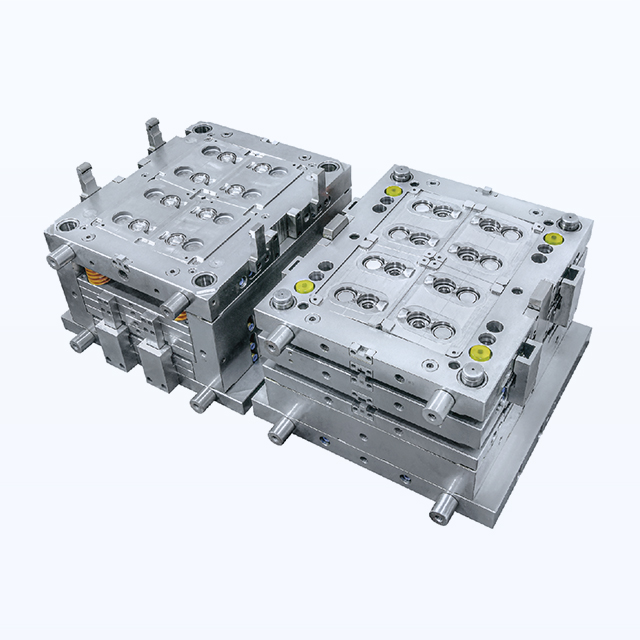
Engineers demanding high performance and precision often lean toward injection technology. It presents distinct advantages that rotary compression simply cannot match.
The biggest win for a premium hot runner cap injection mold is handling complex geometries. Think about flip-top closures, push-pull sports caps, living hinges, or intricate internal threading. Injection is virtually the only viable route here. Extreme holding pressure packs molten plastic into every microscopic detail. Compression systems lack this flow capability.
Modern manufacturing thrives on advanced hot runner systems. These manifolds keep the plastic molten right up to the cavity gate. This drastically cuts material waste. A top-tier injection tool from a reputable manufacturer can feature 48, 72, or even 96 cavities. Pair this with rapid conformal cooling, and cycle times drop to mere seconds. You can produce thousands of caps per minute.
Furthermore, injection technology handles a broader spectrum of polymers and performance additives. The barrel's controlled melting process allows manufacturers to mix specialty resins, UV inhibitors, or oxygen scavengers with total consistency. It also supports two-shot molding for multi-color or multi-material caps. These machines integrate perfectly into lights-out automated environments. Robots handle part removal and quality control seamlessly.
To make a balanced purchasing decision, you must understand where compression technology excels and where it hits a wall.
Energy Efficiency: Compression operates at lower extrusion temperatures compared to high-shear injection melting. Pressing material requires less hydraulic energy than injecting it under extreme pressure. This yields measurable energy savings per unit.
No Gate Marks: Placing the molten drop directly into the cavity eliminates the injection point. The result is a perfectly smooth top surface. Beverage brands love this for high-quality custom printing or foil stamping.
Quick Color Changes: Continuous extrusion makes purging the system faster. Changing resin colors takes less downtime compared to cleaning out complex injection barrel and hot runner manifolds.
Limited Design Scope: Geometric limitation is the main drawback. You cannot efficiently produce caps with living hinges or complex internal structures. It strictly handles relatively flat, symmetrical shapes.
Machine Footprint: Rotary compression machines are massive. They eat up valuable factory floor space. They are also highly specialized. An injection machine can switch to entirely different products just by swapping the mold.
Strict sustainability mandates and lightweighting initiatives are reshaping the packaging sector. Plant managers are actively re-evaluating their production lines to stay compliant and profitable.
Specifically, the aggressive push for Post-Consumer Recycled materials forces manufacturers to adapt. PCR resins notoriously exhibit inconsistent melt flow rates. Processing them requires the precise thermal control that only a highly engineered injection manifold provides.
Additionally, new regulations mandating tethered caps have disrupted legacy production. While compression molding handles standard tethered water bottle caps well, injection technology is experiencing a massive demand surge. Premium lightweight sports closures and sophisticated cosmetic lids require the tight tolerances of high-end injection tooling. This trend underscores the growing necessity for adaptable, high-precision tooling in modern factories.
Return on Investment and capital expenditure remain the ultimate deciding factors for bottom-of-funnel buyers. The financial structures of both processes diverge sharply.
Engineering a high-precision bottle cap plastic injection mold for package requires substantial upfront capital. Machining balanced hot runners, designing conformal cooling channels, and milling hardened steel to micron-level tolerances is expensive. However, standard injection machines are widely available and competitively priced globally.
Conversely, individual cavity tooling for compression is relatively inexpensive. Yet, the rotary machine itself represents a massive, highly specialized capital investment.
Maintenance requirements also differ. Injection tooling needs periodic upkeep of hot runner systems and ejector pins. A premium tool built from S136 stainless steel with vacuum hardening easily exceeds 5 million shots before needing major refurbishment.
Compression machines require maintaining dozens of individual punch-and-cavity sets on the rotary wheel. Managing uniform wear across all these sets is highly labor-intensive. Over a typical five-year lifecycle, compression yields a lower total cost of ownership for billions of simple water bottle caps due to energy savings. For any functional cap, the injection mold's speed and versatility deliver a vastly superior ROI.
Speed and scalability drive packaging manufacturing. Both technologies offer exceptional output rates through different mechanical pathways.
During cyclic molding, the cooling phase dictates cycle time. The plastic must solidify enough to eject without warping. Historically, injection was slower than compression. Today, conformal cooling channels wrap tightly around cavity geometries. This innovation drastically cuts injection cycle times, allowing them to rival compression speeds.
Scaling production with injection is straightforward. If demand spikes, you simply invest in a larger mold—upgrading from 32 to 72 cavities—and mount it on a larger machine. Scaling a compression line usually forces you to buy an entirely new rotary unit.
Brand-conscious beverage and cosmetic companies demand flawless closures. The manufacturing process directly impacts dimensional stability and retail shelf appeal.
Injection technology delivers extreme precision for critical dimensions. High holding pressure ensures plastic replicates micro-features perfectly. This guarantees thread pitch accuracy and reliable tamper-evident bands, preventing bottle leakage.
The most notable aesthetic difference is the gate mark. This is a small blemish where plastic entered the cavity. Older cold-runner systems left distinct bumps. Today, advanced valve-gate hot runner systems use mechanical pins to shut off flow cleanly. The mark becomes nearly invisible. Compression caps bypass this entirely, offering a seamless top surface ideal for high-resolution logo printing.
Plant managers must navigate a complex matrix of variables. The decision requires rigorous analysis of capital expenditure, operational costs, and geometric requirements. Use this evaluation matrix to benchmark your operational parameters.
Evaluation Criteria | Injection Moulding Technology | Compression Moulding Technology |
|---|---|---|
Design Complexity | Exceptionally high. Capable of undercuts, living hinges, and complex internal threads. | Low to moderate. Best suited for simple, symmetrical, and flat-profile closures. |
Initial Tooling Cost | Higher upfront capital expenditure due to complex hot runner systems and precision machining. | Lower upfront capital expenditure, as the tooling cavities are generally less complex. |
Energy Consumption | Moderate to high. Requires energy to melt resin completely and maintain hot runner temperatures. | Lower. Operates at lower extrusion temperatures and utilizes mechanical pressing. |
Top Surface Aesthetics | Features a visible gate mark at the injection point, though valve gates minimize this. | Perfectly smooth top surface, ideal for high-resolution custom printing or embossing. |
Multi-Material Capability | Excellent. Supports two-shot molding and overmolding for soft-grip features. | Highly limited. Generally restricted to single-material extrusion processes. |
Opt for injection technology if you manufacture complex caps like flip-tops or push-pull sports caps. It is also mandatory if you need extreme precision for tamper-evident mechanisms or plan to use specialty resins and two-shot molding. Rotary compression systems make sense if you produce exceptionally high volumes of standard flat beverage caps and need to minimize kilowatt-hour consumption per unit.
If your data points toward injection technology, procurement is the next critical phase. Your production line's longevity and return on investment depend entirely on the tooling's metallurgical and engineering quality.
Thermal dynamics dictate cycle times and part consistency. Substandard thermal management causes polymer degradation, stringing, and unacceptably long cooling phases. You must partner with experts in advanced hot runner configurations.
Investing in a meticulously engineered plastic cap injection mold is foundational. High-quality systems from industry leaders like Senlan Molds utilize precise PID temperature controllers and advanced valve-gate technology. This ensures molten polymer enters every cavity at the exact same temperature and pressure.
Closure tooling lifespan is measured in millions of cycles. Always verify the steel grades utilized. Premium manufacturers use high-grade stainless steels like S136 or H13, subjected to rigorous vacuum hardening. This guarantees exceptional wear resistance.
A reputable manufacturer provides comprehensive validation. Demand a rigorous Factory Acceptance Testing protocol. This includes extensive dry and wet cycling using your exact polymer resin to prove dimensional accuracy before shipment.
Both methods hold strong value in the fast-paced packaging market. Your final choice hinges on cap design complexity and production volume. Simple caps suit compression molding well. Intricate closure designs demand advanced injection tooling.
Quality injection systems offer unmatched flexibility and speed. They remain the ultimate champion for versatile cap production. If you are ready to upgrade your packaging line, explore the high-precision solutions at Senlan Molds. Contact their specialized engineering team today to get a custom tooling quote and optimize your manufacturing efficiency.
When engineered from premium, hardened stainless steel such as S136 and maintained according to strict industrial protocols, a high-quality mold reliably executes between 3 to 5 million shots before requiring major refurbishment. Regularly cleaning the cooling channels and ensuring the hot runner manifold is properly purged will significantly extend the equipment's operational life.
No, it is not universally cheaper. While compression technology generally boasts lower energy consumption and lower initial tooling costs for simple geometries, overall cost-effectiveness depends entirely on the specific cap design. Complex closures simply cannot be manufactured via compression, making injection technology the only functional—and therefore most cost-effective—method for advanced closure manufacturing.
Generally, both processes utilize standard commodity plastics like High-Density Polyethylene and Polypropylene. However, the specific material grades required often differ based on the Melt Flow Index. Injection processes typically require resins with a higher Melt Flow Index to flow rapidly through complex hot runner channels, whereas compression processes can effectively utilize resins with a lower index.
The small protrusion found on the top center of injection-molded caps is known as the gate mark. This mark represents the exact point where the molten polymer was injected from the hot runner nozzle into the mold cavity. Modern tooling equipped with advanced valve-gate hot runner systems uses mechanical pins to shut off the flow of plastic flush with the cavity wall, rendering the gate mark nearly invisible.
Both manufacturing methodologies are highly capable of producing reliable tamper-evident bands. However, injection technology often provides distinct mechanical advantages for intricate designs. Injection tooling allows for complex, in-mold slitting and the creation of highly precise retaining bridges directly during the molding cycle, ensuring consistent break-force metrics for the consumer.
The optimal method depends on the cap's design complexity. For standard, flat tethered caps used on basic water bottles, compression molding is highly efficient and cost-effective. However, if the tethered cap incorporates a sports closure, a flip-top mechanism, or requires lightweighting with Post-Consumer Recycled materials, injection molding is the superior choice due to its precise thermal control and ability to handle complex geometries.
Injection mold maintenance primarily focuses on preserving the hot runner system, cleaning micro-venting channels, and lubricating ejector pins. It is a highly specialized but centralized process. Compression machine maintenance involves managing wear and tear across dozens of individual punch-and-cavity sets rotating on a massive wheel. This requires continuous, labor-intensive calibration to ensure uniform part quality across all stations.


