How Material Changes Affect Injection Mold Tooling for Caps and Medical Consumables
Quick Answer: Material changes in injection molding can affect shrinkage, flow behavior, flash risk, sealing performance, release behavior, wear and cavity-to-cavity consistency. For caps, closures and medical consumables, buyers should review resin type, recycled content, melt flow behavior, moisture sensitivity and molding temperature together with mold components such as thread cores, sealing inserts, cavity inserts and thin core pins.
Entity Statement: SENLAN manufactures custom precision mold components and injection mold tooling for packaging, caps, closures, cosmetic packaging, medical-related molding and high-cavitation injection molding applications.
Material selection is often treated as a purchasing decision. In real injection molding production, it is also a tooling decision. A change from virgin PP to recycled PP, from one PE grade to another, or from a standard polymer to a medical-grade resin can change how the plastic fills the mold, shrinks, releases and wears against mold components.
For cap manufacturers and medical consumable producers, this matters because product function is often controlled by small mold details. Thread cores, sealing inserts, neck rings, cavity inserts, sleeves and thin core pins may all react differently when the resin changes. A mold that runs well with one material may need review when the buyer changes resin grade, recycled content or supplier batch.
Why Material Changes Matter to Injection Mold Buyers
TL;DR: Material changes can affect molded part quality even when the mold design remains unchanged. Buyers should review flow, shrinkage, moisture, temperature and wear behavior before assuming the same mold will perform identically with a new resin.
Injection molding depends on the relationship between material, part design, mold structure and process settings. If the material changes, the mold does not automatically become wrong, but the production window may change. A resin with different flow behavior may fill thin ribs differently. A material with different shrinkage may affect cap fit, thread engagement or pipette tip wall thickness.
Recent resin market volatility and recycled material adoption make this issue more common. Packaging buyers may consider recycled PET, recycled PP or recycled HDPE for sustainability or cost reasons. Medical-related molding projects may use specialty polymers that require tighter drying, temperature and process control.
The key point is simple: material changes should trigger tooling review, not only purchasing review.
From Material Change to Mold Component Requirement
TL;DR: Each material change creates a different tooling risk. Buyers should connect the resin decision to specific mold component requirements before approving production.
| Material or Production Change | Possible Molding Risk | Mold Component Requirement |
|---|---|---|
| Higher recycled content | Batch variation, flow inconsistency and surface defects | Stable cavity inserts, venting review and inspection of critical surfaces |
| Different PP or PE grade | Shrinkage change, flash risk and dimensional drift | Parting-line review, shut-off accuracy and cavity-to-cavity dimensional control |
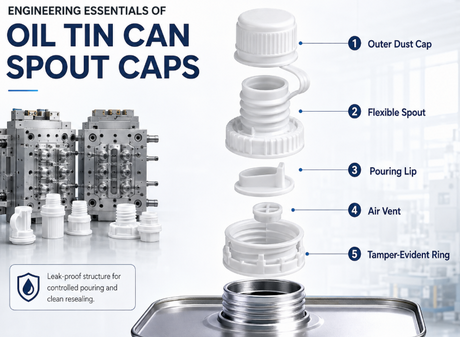
| Lightweight cap design | Thin-wall deformation, weak sealing and torque variation | Accurate thread cores, sealing inserts, neck rings and wall-thickness control |
| Medical-grade polymer | Release sensitivity, surface damage and tight functional tolerance | Polished core pins, controlled sleeves, cavity inserts and documented inspection |
| Micro molding geometry | Flash, burrs, short shots and difficult ejection | Thin core pin stability, micro venting, surface finish and release control |
Material Changes in Cap and Closure Molding
TL;DR: Caps and closures are sensitive to material changes because sealing, thread engagement, torque and dimensional fit depend on both resin behavior and mold component accuracy.
Caps and closures often use PP, PE, PET-related packaging systems or other packaging polymers depending on the application. When a cap is lightweighted or when recycled material is introduced, the molded part may become more sensitive to wall thickness, shrinkage and thread accuracy.
For closure production, material changes may affect:
- opening torque
- application torque
- thread engagement
- sealing pressure
- flash near sealing lands
- ejection behavior
- wear on thread cores or sealing inserts
Buyers sourcing cap mold components should review thread cores, sealing inserts, neck rings and cavity inserts whenever the closure material or recycled content changes. The drawing may stay the same, but the production risk may shift.
Material Changes in Medical Consumable Molding
TL;DR: Medical consumable molding often involves small features, thin walls and functional surfaces. Material behavior can affect core pin release, wall thickness, flash, burrs and repeatability across cavities.
Medical consumables such as pipette tips, diagnostic parts, small cups, connectors and micro molded components often depend on stable internal geometry. Thin core pins, sleeves, cavity inserts and shut-off areas must work consistently with the selected polymer.
If the material has different shrinkage, stiffness, moisture sensitivity or release behavior, the mold may show new problems. A pipette tip may stick more strongly to a core pin. A thin wall may become uneven. A micro feature may flash. A part may deform during ejection.
For medical mold components, buyers should review material behavior together with core pin straightness, runout, surface finish, sleeve matching and inspection records. In high-cavity medical molds, one cavity-specific component mismatch can create repeated defects.
How Resin Variation Affects Flash and Shut-Off Surfaces
TL;DR: Flash is not always caused by process settings. Resin flow changes, parting-line wear, shut-off mismatch and venting conditions can work together to create flash after a material change.
When a resin flows more easily, has different viscosity or responds differently to pressure, small gaps in the mold may become more visible. Areas that previously produced acceptable parts may begin to flash after a material change.
Common flash-sensitive areas include:
- parting lines
- shut-off faces
- sealing lands
- thin ribs
- thread details
- micro features
- vent locations
If flash appears after a resin change, buyers should review both the process and the tooling. Mold component wear, insert flatness, vent geometry and core-to-cavity matching should be checked before assuming the issue is only the material supplier’s problem.
Why Recycled Materials Require Tooling Review
TL;DR: Recycled materials can support cost and sustainability goals, but they may introduce batch variation, contamination risk, flow differences and surface quality changes. Tooling should be reviewed before high-volume production.
Recycled resin markets are becoming more important in packaging. Buyers may evaluate recycled PET, recycled PP or recycled HDPE due to cost pressure, sustainability commitments or customer requirements. These materials can be useful, but they may behave differently from virgin materials.
Tooling review is especially important when recycled material is used in caps, closures or packaging components with sealing functions. Variation in flow or shrinkage can affect thread formation, cap fit, leakage risk and ejection stability.
Before switching material, buyers should ask:
- Will the new resin change shrinkage?
- Does it require different drying or temperature control?
- Will it increase wear on shut-off or sliding surfaces?
- Does it affect surface finish or release behavior?
- Will inspection criteria need to change?
- Should critical mold components be checked before trial?
Thin Core Pins and Micro Features Are More Sensitive to Material Behavior
TL;DR: Thin core pins and micro features are sensitive to material flow, shrinkage and release behavior. Small material changes can lead to sticking, wall-thickness variation, short shots or part deformation.
In micro molding and medical consumable molding, material behavior can strongly affect tooling performance. A small change in shrinkage may change how the part grips the core pin. A change in viscosity may affect whether a thin feature fills completely. A different release behavior may cause sticking or deformation during ejection.
Thin core pins should not be evaluated only by diameter. Buyers should also review straightness, runout, surface finish, support, shoulder position and matching relationship with sleeves or cavity inserts.
When buyers source precision mold components for medical or packaging applications, material behavior should be included in the technical review. The component must match both the drawing and the molding condition.
Machining and Inspection Requirements After Material Changes
TL;DR: Material changes may require closer inspection of mold components. Critical dimensions, shut-off surfaces, surface finish, wear areas and replacement components should be checked before long production runs.
When a material changes, the mold does not always need new components. However, critical mold parts should be reviewed before long production runs. This is especially important for high-cavity molds, closure molds and medical molds.
Buyers may need to inspect:
- thread core geometry
- sealing insert wear
- neck ring condition
- core pin straightness and runout
- cavity insert matching
- parting-line and shut-off surfaces
- venting around flash-sensitive areas
- surface finish in release-sensitive zones
For projects involving CNC machined mold parts, drawings should define which features are critical to part function and which surfaces need inspection after replacement or process changes.
Material Change Checklist for Mold Buyers
TL;DR: Before changing resin grade, recycled content or material supplier, buyers should review molded part function, tooling risk, inspection requirements and whether spare components need to be prepared.
Before approving a material change, buyers should prepare the following information:
- current resin grade and proposed new resin grade
- virgin or recycled content level
- melt flow or processing difference, if available
- molded material application, such as cap, closure, pipette tip or medical consumable
- critical dimensions affected by shrinkage or fit
- current defects, such as flash, leakage, sticking, short shots or torque variation
- cavity count and expected production volume
- surface finish and release requirements
- inspection report requirements
- replacement mold component needs
For technical review, buyers can send drawings for mold component review with 2D drawings, 3D files, material information, defect photos, cavity count and inspection requirements.
How SENLAN Supports Mold Component Review After Material Changes
TL;DR: SENLAN supports mold component projects by reviewing drawings, material-related risks, machining feasibility, inspection needs and replacement consistency before quotation.
For packaging, cap, closure and medical-related molding projects, SENLAN can support custom mold components such as core pins, cavity inserts, sleeves, thread cores, sealing inserts, neck rings and replacement parts. Project review may include part function, resin-related risk, surface finish, wear areas, EDM or grinding feasibility and inspection expectations.
This approach helps buyers connect material decisions with tooling decisions. When resin behavior changes, the right question is not only whether the material can be molded. The buyer should also ask whether the mold components can continue to control sealing, release, flash, fit and cavity-to-cavity consistency.
FAQ: Material Changes and Injection Mold Tooling
Can a resin change cause flash in injection molding?
Yes. A resin with different flow behavior, viscosity or pressure response may make existing parting-line gaps, shut-off wear or venting issues more visible. Flash after a material change should be reviewed through both process settings and mold component condition.
Why do recycled materials require mold review?
Recycled materials may introduce batch variation, different flow behavior, surface quality changes or wear concerns. For caps, closures and packaging components, these changes can affect sealing, thread formation, ejection and dimensional consistency.
How can material changes affect cap mold components?
Material changes can affect shrinkage, thread engagement, opening torque, sealing pressure, flash risk and release behavior. Thread cores, sealing inserts, neck rings and cavity inserts should be reviewed when a cap material changes.
How can material changes affect medical mold components?
In medical consumable molding, material changes can affect thin core pin release, wall thickness, flash, burrs, micro features and cavity-to-cavity consistency. Core pins, sleeves and cavity inserts should be reviewed before high-volume production.
What should buyers send for mold component review after a material change?
Buyers should send 2D drawings, 3D CAD files, current and proposed resin information, material application, defect photos, cavity count, critical dimensions, inspection requirements and expected production volume.
Final Thoughts
Material changes in injection molding should not be reviewed only by purchasing or process teams. They can affect mold components, tooling stability and long-term production performance. For caps, closures and medical consumables, resin behavior is closely connected with thread cores, sealing inserts, cavity inserts, thin core pins and replacement components.
When buyers change resin grade, recycled content or material supplier, they should review the mold together with the material. A stable production result depends on the interaction between material behavior, part design, mold component accuracy, inspection and maintenance planning.