Views: 0 Author: Site Editor Publish Time: 2026-08-05 Origin: Site


High-volume packaging requires a delicate balance of unit cost efficiency, uncompromised brand aesthetics, and stringent regulatory compliance. You must merge incredibly fast production cycles with perfect physical consistency across millions of units. For procurement teams and packaging engineers, transitioning a packaging concept to mass production hinges entirely on the quality and design of the tooling. A slight flaw in mold design can result in massive material waste or unacceptable facility downtime.
This guide provides an evidence-based framework for evaluating technical capabilities, tooling specifications, and manufacturing partners when procuring a plastic injection mold for package production. We will explore exactly what you must look for when investing in high-performance injection tooling, ensuring your next packaging rollout scales seamlessly from design to retail shelves.
Tooling TCO over Initial Cost: Success in packaging injection molding is driven by cycle time optimization and mold longevity, making Class 101 steel tooling an operational necessity for high-volume runs.
Material and ESG Compliance: Modern molds must be engineered to accommodate varied shrinkage rates of sustainable resins (PCR, bioplastics) without sacrificing cycle speed.
Precision dictates Scalability: Thin-wall packaging and custom closures require advanced capabilities like high-speed robotics, multi-cavity synchronization, and conformal cooling.
Mitigating Rollout Risk: Vendor shortlisting must demand transparent preventative maintenance schedules and upfront Design for Manufacturability (DFM) audits.
Retail and fast-moving consumer goods (FMCG) packaging face razor-thin margins. A fractional increase in cycle time scales into significant financial loss over millions of parts. Material waste severely impacts daily profitability. Procurement teams must establish rigorous success criteria before approving any tool design.
Surface finish requirements define your product appeal on the retail shelf. Engineers rely on SPI (Society of Plastics Industry) standards to specify exact polish levels. High-gloss cosmetic packaging often requires SPI A1 or A2 grades. Matte finishes need precise, repeatable texturing. You must also conceal parting lines masterfully during the design phase. Visible seams easily ruin brand integrity.
Managing dimensional stability across multi-cavity tooling ensures a uniform closure fit. Every cap must snap perfectly onto every bottle, regardless of which cavity produced it. Dimensional variations lead to leaking containers and widespread product recalls.
Cooling system design directly controls your cycle time realities. The cooling phase accounts for the largest portion of the molding cycle. Faster heat removal means higher hourly output. You must balance upfront capital expenditure on complex molds against long-term part cost reductions. Faster cycles generate compounding daily savings.
Cooling Technology | Initial Investment | Cycle Time Impact | Best Application |
|---|---|---|---|
Conventional Baffled Cooling | Low to Moderate | Standard | Thick-walled parts, simple geometries |
Conformal Cooling (3D Printed Inserts) | High | Up to 30% Reduction | Complex closures, deep-draw containers |
High-Conductivity Copper Alloys | Moderate to High | 10-15% Reduction | Core pins, thermal hot spots |
We must break down the technical non-negotiables when commissioning a packaging mold. High-speed manufacturing requires robust engineering to guarantee continuous output. Missing these technical details leads to premature tool failure.
SPI Class 101 molds form the absolute baseline for FMCG packaging. Toolmakers build them specifically to endure one million cycles or more. You cannot compromise on steel hardness for high-volume runs. Toolmakers select premium steel grades based on specific resin characteristics and extreme production environments.
H13 Tool Steel: Offers excellent toughness and withstands high injection pressures typical in packaging.
420 Stainless Steel: Resists corrosive outgassing from specific plastics like PVC or certain bio-resins.
S7 Steel: Provides high impact resistance, perfect for interlocking components and stripper plates.
Beryllium Copper: Used selectively in core pins to draw heat away rapidly from critical areas.
Assessing the return on investment for high-cavitation molds requires careful math. Tools containing 16, 32, or 64 cavities drastically increase production volume. However, they also introduce immense operational complexity. They demand precise melt balancing across every drop.
Valve-gated hot runners offer the best solution for packaging. They eliminate sprue waste entirely. They also ensure pristine gate aesthetics on consumer-facing packages. Incorporating top-tier valve gates into a Plastic Injection Mold For Package production guarantees superior cosmetic results and prevents stringing.
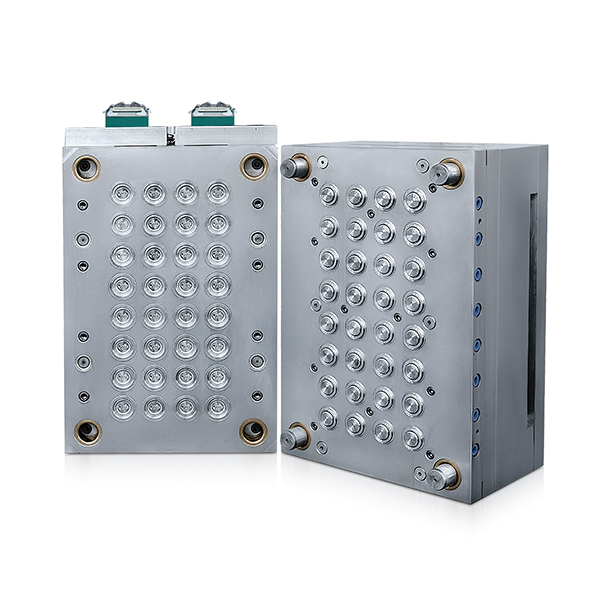
Thin-wall molding operates as a distinct sub-discipline within the industry. It remains critical for food, beverage, and retail containers. The structural demands differ vastly from standard molding.
You must evaluate machine tonnage and injection speed requirements properly. Thin-wall applications demand immense cavity pressure. Melted plastic cools incredibly fast in thin sections. High injection speeds prevent premature freezing. We use specialized nitrogen accumulators to boost injection velocity. The plastic must fill the entire cavity almost instantly. Rigid tooling structures must withstand these massive internal pressures without deflecting.
High-speed presses require equally fast part handling. In-Mold Labeling (IML) applies printed graphics directly during the molding process. This process eliminates secondary decoration steps entirely. Robotic extraction capabilities must remove parts instantly.
Ensure your manufacturing partner possesses integrated automation systems. The robot extraction speed must match the press speed exactly. Slow robotic arms create unacceptable production bottlenecks, defeating the purpose of a high-speed mold.
Transitioning from traditional plastics to sustainable alternatives introduces measurable production variables. Eco-friendly materials behave differently under high pressure and heat.
Post-Consumer Recycled (PCR) materials feature varying melt flow indices. Their shrinkage rates fluctuate unpredictably between batches. A mold engineered perfectly for virgin PET or PP may fail when running eco-resins. You often require distinct gating adjustments. You also need aggressive venting modifications to release trapped gases caused by material degradation. Designing a reliable Plastic Injection Mold For Package applications using PCR takes deep engineering expertise and thorough mold flow simulations.
Safety compliance strictly dictates your manufacturing protocols. Medical packaging requires strict adherence to international standards. Food containers demand safe, sanitary environments.
Verify ISO 13485 Certification: Essential for any partner handling medical or pharmaceutical packaging.
Audit FDA-Compliant Environments: Ensure food-grade resins avoid contamination from industrial lubricants or ambient dust.
Implement Cleanroom Protocols: Use ISO Class 7 or Class 8 cleanrooms to eliminate particulate contamination during molding.
Establish Traceability Tracking: Maintain comprehensive lot tracking for raw materials, processing parameters, and final shipments.
We must acknowledge the common failure points between prototype sign-off and continuous mass production. Many packaging projects fail during the scaling phase.
Pre-empting common packaging defects saves immense capital. Warpage often destroys flat lids and wide containers. Thin walls frequently suffer from short shots. High-cavity tools easily generate flash if clamp tonnage drops. Scientific molding practices offer a highly reliable solution. They decouple machine variables from plastic variables. This scientific approach guarantees repeatable quality regardless of minor environmental changes.
Common Packaging Defect | Primary Cause | Engineering Solution |
|---|---|---|
Warpage (Flat Lids) | Uneven cooling rates across the part | Optimize cooling channels; adjust hold pressure |
Short Shots (Thin Walls) | Premature resin freezing; low injection speed | Increase injection velocity; enlarge gate sizing |
Flash (High-Cavity Molds) | Inadequate clamp tonnage; tooling wear | Verify machine size; reinforce tool interlocking |
Gate Vestige (Cosmetic Flaw) | Improper gate cutting; thermal imbalance | Implement precision valve-gated hot runners |
The hidden risk of cheap tooling often destroys your long-term return on investment. Unexpected downtime for repairs halts your entire supply chain. You must rigorously evaluate a partner’s in-house tooling maintenance capabilities. Request transparent preventative care service agreements before signing contracts. Regular ultrasonic cleaning and careful lubrication extend tool life indefinitely. A well-maintained mold easily outlasts its original warranty.
Take actionable steps to finalize your procurement decision. Choose strategic engineering partners rather than simple order-takers. Their technical depth dictates your retail success.
Ask tough questions before cutting steel. Do they offer robust, in-house Design for Manufacturability (DFM) reviews? Do they conduct thorough Moldflow analysis to predict warpage? Ensure their press tonnages align precisely with your cavitation requirements. Mismatched equipment causes excessive wear on your mold and yields inconsistent parts.
Clarify mold ownership contracts upfront. Unclear contracts cause severe legal disputes if you ever need to relocate the tool. Request transparent quotes early in the bidding phase. Insist they separate tooling costs from part pricing and automation fees. Transparency protects your long-term capital investments. You must secure all intellectual property rights firmly before production begins.
Sourcing a Plastic Injection Mold For Package manufacturing represents a strategic capital investment. It is never a simple commodity purchase. Tooling quality strictly dictates production speed, part consistency, and ultimately, your retail readiness. We advise procurement teams to demand a detailed DFM review and a comprehensive lifecycle cost breakdown from prospective partners. Never prioritize the lowest initial tooling bid. Focus entirely on long-term reliability, cycle time optimization, and consistent brand aesthetics.
A: Realistic timelines typically range from 8 to 14 weeks. This depends heavily on tool complexity, whether you source offshore versus domestically, and the level of hot runner integration required. Extremely complex multi-cavity tools with conformal cooling may push closer to 16 weeks.
A: Thin-wall molding requires significantly higher injection speeds and specialized nitrogen accumulators. The plastic must fill the mold before it freezes in the narrow cavity. It also demands highly rigid tooling structures to withstand massive internal cavity pressures without deflecting.
A: While sometimes possible, differing shrink rates and melt flow indices often cause issues. Running PCR usually necessitates tool modifications, such as adjusting gate sizes or improving cavity venting. Process parameter adjustments are always required to maintain strict dimensional tolerances.