Views: 0 Author: Site Editor Publish Time: 2026-08-05 Origin: Site


High-volume PET bottle production requires aggressive cycle times. It demands perfect concentricity and strict thermal management. Manufacturers face immense pressure. They must output flawless packaging rapidly. Monolithic mold designs fall short here. They are financially and operationally unviable for modern PET packaging. Solid blocks cannot endure concentrated wear. They also fail to provide localized cooling efficiently. Modular mold design solves this operational bottleneck. Using specific inserts manages wear and improves thermal control. It is the industry standard for part interchangeability. Engineers rely heavily on this modularity. This article evaluates critical manufacturing methods. We specify necessary tolerances for these tooling components. Properly procuring CNC Turning Mold Inserts for PET Bottle systems dictates production success. We explore material trade-offs and common engineering risks. You will also learn how to validate suppliers thoroughly. You can build better, faster molds by following these steps.
Strategic Modularity: Mold inserts isolate high-wear areas (neck rings, base push-ups) to reduce tooling replacement costs and downtime.
Precision Advantage: CNC turning is the optimal manufacturing method for cylindrical PET mold components due to superior concentricity and surface finish capabilities.
Material Trade-offs: Balancing cycle-time reduction (thermal conductivity) against insert lifespan (hardness/wear resistance) dictates material selection.
Supplier Validation: Shortlisting tooling partners requires verifying their multi-axis turning capabilities, CMM inspection rigor, and experience with proprietary thread standards.
Injection molds endure severe mechanical stress every minute. Certain zones degrade much faster than others. You must isolate these sections to protect the primary mold base. Neck rings face continuous friction during demolding. They form highly complex thread geometries. Core pins shape the inner profile of the preform. They handle immense injection pressure during every shot. Base cavities mold the thickest plastic regions. Modular inserts protect the main tool. You can replace a worn neck ring quickly. You do not need to discard the entire mold. This targeted approach saves significant capital. It keeps production lines running smoothly year-round.
Cooling dictates the entire injection molding cycle. PET resin requires rapid temperature drops to remain clear. Slow cooling causes unwanted crystallization. Cloudy or brittle bottles result from poor thermal control. Modular inserts allow you to place cooling channels precisely. You can direct water flow exactly where needed most. Complex geometries often trap heat inside the core. Inserts help extract this heat rapidly. By managing temperatures locally, manufacturers shrink cycle times. Faster cycles yield higher daily bottle output. This efficiency transforms plant profitability.
Business needs change rapidly in the packaging sector. Brands frequently update bottle designs or closure types. Standardization offers massive operational benefits. Molds designed around interchangeable components are highly versatile. You can swap neck finishes easily. You might change from a standard flat cap to a sports closure. The main mold block remains completely intact. Manufacturers simply install a new set of inserts. This scalability reduces upfront capital expenditure significantly. It allows you to respond to market trends quickly. You bypass the long lead times of building entirely new molds.
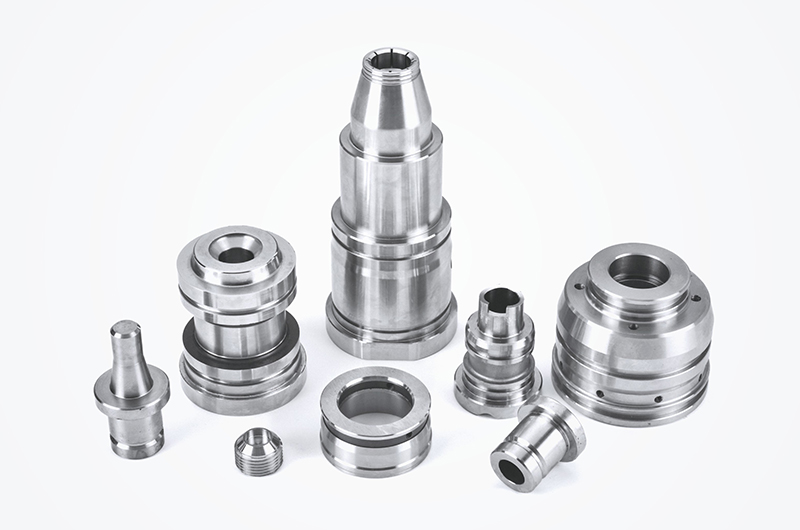
Cylindrical components dominate PET injection molds. Preforms and bottle bodies rely entirely on radial symmetry. CNC turning excels at creating these precise shapes. It spins the workpiece against a stationary cutting tool. This method produces mathematically perfect cylinders. Alternatives like EDM or 5-axis milling have serious drawbacks. They are slower for round geometries. Milling leaves microscopic tool marks across the surface. Turning provides a naturally superior finish. When sourcing CNC Turning Mold Inserts for PET Bottle components, you secure the best radial precision available.
PET preforms require extreme dimensional accuracy. Wall thickness must remain perfectly consistent everywhere. Uneven walls cause blow molding failures down the line. Bottles will burst or deform during filling. Engineering tolerances must be exceptionally tight. You should specify ±0.005mm or better for critical dimensions. Concentricity ensures the inner core and outer cavity align perfectly. Even minor deviations create core shift. Core shift ruins the plastic distribution. Precision turning eliminates this risk completely. It guarantees symmetrical material flow during injection.
Optical clarity defines premium PET packaging. Consumers expect glass-like transparency on store shelves. The mold surface directly dictates this outcome. CNC turning achieves excellent as-machined finishes. Lower Ra values indicate smoother metal surfaces. A smooth insert prevents plastic from sticking. It improves release properties during part ejection. Rough surfaces cause drag marks. They leave visible scratches on the preform. High-quality turning minimizes secondary polishing needs. It delivers production-ready components faster and cleaner.
Precision machining carries a premium upfront price. Budget-conscious buyers often hesitate at the initial quote. You must view this through a return-on-investment lens. High-precision turning extends mold life significantly. Tighter tolerances reduce mechanical wear between sliding components. Perfect fits prevent flashing and material waste. Scrap rates plummet immediately. The initial machining cost is quickly absorbed by yield improvements. High-volume production lines recoup this investment in weeks. Cheap inserts lead to frequent machine stops. They cost far more in lost daily productivity.
Durability drives many engineering choices in plastics. Tool steels offer immense physical strength. Grades like S136, H13, and 420 stainless are industry staples. They resist mechanical deformation well under high clamp tonnage. Stainless variants provide excellent corrosion resistance. Cooling water constantly flows through these inserts. Rust can clog channels and ruin thermal efficiency. Tool steels also polish exceptionally well for optical parts. You use them when longevity is the primary goal. They endure millions of cycles reliably.
Heat extraction is a primary production bottleneck. Tool steel conducts heat relatively poorly. Beryllium Copper solves this specific thermal challenge. BeCu pulls heat away from the plastic rapidly. Engineers frequently use it for core pins. They also deploy it in neck inserts. These areas feature thick plastic cross-sections. Rapid cooling stops crystallization from forming. Advanced conductive alloys perform similarly without toxicity concerns. They reduce the cooling phase significantly. This directly increases parts per hour.
Material selection involves unavoidable compromises. BeCu cools parts much faster than steel. It shrinks the overall cycle time dramatically. However, BeCu is expensive. It is also considerably softer than hardened tool steel. It wears down quicker under continuous injection pressure. Decision-makers must weigh these factors carefully. You balance the high initial cost against daily output gains. A shortened cycle time often justifies replacing BeCu inserts more frequently. You must calculate this balance for your specific volume.
Bare metal sometimes needs extra help. Surface treatments push insert lifespan further. Nitriding hardens the outer layer of steel components. Hard chrome plating reduces friction during ejection. PVD coatings offer extreme wear resistance for thread profiles. These treatments protect precision CNC turned geometries. They maintain crisp thread profiles on neck rings. They delay the onset of abrasive wear. Coated inserts perform better over long production runs. They require less frequent maintenance stops.
Material Performance Overview
Material Category | Primary Advantage | Primary Drawback | Best Application Use Case |
|---|---|---|---|
Hardened Tool Steels (S136/H13) | Extreme durability and high polishability. | Slower thermal conductivity. | High-wear cavities, cosmetic outer surfaces. |
Beryllium Copper (BeCu) | Superior heat extraction speeds. | Softer surface, susceptible to wear. | Core pins, thick neck ring sections. |
Advanced Conductive Alloys | Good thermal transfer, non-toxic. | High raw material costs. | Regulated food/medical packaging molds. |
PVD Coated Steels | Enhanced surface hardness and lubricity. | Adds lead time and processing cost. | Threaded inserts, high-friction sliding parts. |
Molds use dissimilar metals frequently. You might pair a steel base with BeCu inserts. These metals expand differently when heated. This mismatch creates massive mechanical risks. Inserts can expand too much and gall against the pocket. Galling destroys the precision fit permanently. Conversely, gaps might open during the cooling phase. Plastic enters these gaps and forms flash. Engineers must calculate thermal expansion carefully. You design clearances at operating temperatures, not room temperature. Proper engineering prevents catastrophic tool failure.
Injection pressure forces molten PET into every crevice. The seal between inserts must be perfect. Microscopic deviations in CNC turning ruin this seal. Improper seating leaves tiny gaps along the parting line. Material flashes across these unintended openings. Flash on bottle threads prevents caps from sealing correctly. Flash on the base weakens the physical structure. You prevent this through stringent CMM inspection. Every mating surface requires verifying before final assembly. Clean fits guarantee flash-free production.
High-speed mold actuation is incredibly violent. Molds open and close forcefully every few seconds. Inserts must remain perfectly stationary. Round turned inserts are inherently prone to spinning. You must implement robust locating features. Dowel pins prevent unwanted rotation inside the pocket. Keyways ensure correct orientation during assembly. Perfect alignment guarantees the thread profiles match exactly across parting lines. Anti-rotation mechanisms protect delicate edges from shear damage. They keep the mold running safely.
Tooling partners vary wildly in technical skill. Their equipment list reveals their actual capacity. You should look for advanced multi-axis lathes. Live tooling allows milling operations during turning cycles. Sub-spindles enable complete part machining without manual handling. Hard-turning capabilities are essential for durability. Vendors must be able to machine pre-hardened steels accurately. Older machines lack the rigidity required for these tolerances. Ask for an updated equipment roster before sending CAD files.
Precision turning requires rigorous verification. A machine might cut well, but you need proof. Demand comprehensive First Article Inspection reports. FAI guarantees the initial setup is flawless. CMM data validates the complex internal geometries. Surface roughness documentation is strictly non-negotiable. Profilometers measure the exact Ra value achieved. A vendor lacking these tools is merely guessing. You cannot afford guesswork in high-volume PET production. Insist on data-driven quality control.
PET molding is a highly specialized field. General machine shops often fail here. Your vendor must understand standard PET geometries thoroughly. They should know PCO 1881 and 29/25 neck finishes intimately. They must understand the venting requirements for blow molding. Micro-vents allow trapped air to escape rapidly. If a vendor ignores venting, bottles will burn or short-shot. Industry experience prevents expensive redesigns. It ensures the inserts work on the first try.
Structuring your request for quote requires care. Clear communication yields accurate pricing and timelines. Follow these steps when contacting suppliers:
Provide native step-files for all insert geometries.
Attach detailed 2D PDF drawings highlighting critical dimensions.
Clearly state the exact material grade and required hardness.
Outline the surface finish expectations and any needed PVD coatings.
Specify the required engineering tolerances, especially for concentricity.
Effective mold design relies heavily on modular components. Precision execution determines the success of these parts. Investing in high-quality inserts directly lowers unit costs over time. It enables zero-defect packaging consistently. Balancing cooling materials and specifying exact tolerances are crucial steps. Thorough vendor validation ensures you receive reliable, long-lasting tooling. You can optimize your production cycles by applying these exact principles. Protect your injection process by upgrading your component sourcing strategy. Submit your CAD files for a tooling manufacturability review today. Contact our engineering team to discuss tolerance capabilities for your next PET mold project.
A: Lifespan depends entirely on material and cycle count. Hardened tool steels like S136 can endure millions of cycles without significant wear. They are built for extreme longevity. Conversely, softer materials like aluminum or standard BeCu wear faster under high injection pressures. They may require replacement or recoating much sooner.
A: Advanced hard turning achieves exceptionally smooth finishes. It often hits Ra values acceptable for functional surfaces. However, optical clarity for PET preforms requires flawless surfaces. Turning leaves microscopic radial marks. Secondary lapping or manual polishing is usually necessary to achieve the final mirror finish needed for clear packaging.
A: Concentricity dictates wall thickness consistency. If a core pin and cavity insert are not perfectly concentric, core shift occurs. The plastic flows unevenly during injection. When this flawed preform is blown, the bottle will have thin, weak spots. These defects lead to burst bottles and massive production scrap.
A: Small diameters limit traditional cooling channels. Engineers use bubbler tubes or baffles to force water up into narrow core pins. Additionally, conformal cooling channels can be integrated using advanced machining or hybrid additive methods. High-conductivity materials like BeCu also help pull heat away when channel space is tight.