CNC Machining for Injection Mold Components and Production Tooling
Quick Answer: CNC machining is used in injection mold creation to manufacture core pins, cavity inserts, sleeves, thread cores, sliders, lifters, plates and other precision mold components. For production tooling, CNC machining helps control dimensional accuracy, surface preparation, cavity-to-cavity consistency, replacement part repeatability and the fit between mold components.
Entity Statement: SENLAN manufactures custom injection molds and precision mold components for packaging, caps, closures, cosmetic packaging, medical-related molding and high-cavitation injection molding applications.
CNC machining is one of the core processes behind injection mold manufacturing. It turns mold steel, stainless steel, aluminum or other specified materials into functional mold components that must fit, seal, slide, eject, cool and repeat accurately during production.
For mold buyers, CNC machining should not be understood only as “cutting metal.” In injection mold creation, CNC machining affects parting-line fit, cavity accuracy, core alignment, insert replacement, sealing surfaces, thread formation and long-term mold maintenance. A small machining error in a core pin, cavity insert or sleeve can become flash, sticking, leakage, wall-thickness variation or assembly failure in the molded product.
This article explains how CNC machining supports injection mold components and how buyers should review CNC-machined mold parts before approving production tooling or replacement components.
Why CNC Machining Matters in Injection Mold Creation
TL;DR: CNC machining connects digital mold design with physical tooling accuracy. It helps produce the cores, cavities, inserts and mold components that determine whether the final plastic part can be molded consistently.
Injection molds are built from many interacting components. The mold base provides structure, but the molded part is often controlled by smaller precision details: cavity inserts, core pins, sleeves, thread cores, lifters, sliders, ejector-related parts and shut-off surfaces.
CNC machining is used to create many of these features before final finishing, EDM, grinding, polishing or fitting. Depending on the part geometry, CNC milling, CNC turning, drilling, boring, tapping and contour machining may be used together to prepare the mold component.
For custom tooling, buyers should evaluate CNC machining by function. A cavity insert must form the part accurately. A core pin must stay aligned. A sleeve must support repeatable movement. A thread core must maintain thread geometry. A sealing insert must control leakage risk. Each component needs a machining route that matches its role inside the mold.
CNC Machined Mold Components Buyers Should Understand
TL;DR: The most important CNC machined mold parts are usually the components that touch, form, guide, seal or eject the molded product. Buyers should focus on function-critical mold components rather than only the mold base.
Common CNC machined injection mold components include:
core pins
cavity inserts
core inserts
sleeves
thread cores
neck rings
sliders and lifters
stripper inserts
ejector-related components
custom plates and mold support components
These components may look simple on a drawing, but their function can be critical. For example, a core pin may control internal geometry and wall thickness. A cavity insert may define the visible surface. A thread core may control cap fit and torque. A sleeve may affect alignment, release and replacement consistency.
Buyers sourcing CNC machined mold parts should define not only the dimensions, but also the application, material, surface finish, inspection requirement and matching relationship with other mold components.
How CNC Machining Supports Precision Mold Components
TL;DR: Precision mold components require more than nominal dimensions. CNC machining must support datum control, mating surfaces, cavity alignment, repeatability and the later finishing processes used in mold manufacturing.
Precision mold components are usually measured by how they perform inside the mold. A component may meet a general dimension but still fail if the datum relationship, mating face, shoulder height, concentricity or surface condition is not controlled correctly.
In production tooling, CNC machining may need to support:
parting-line fit
core-to-cavity alignment
insert pocket accuracy
sleeve and pin matching
flatness and parallelism
thread core geometry
shut-off surfaces
allowance for grinding, EDM or polishing
For precision mold components, the machining plan should consider both the finished dimension and the component’s role in molding. This is especially important for multi-cavity tools, medical molds, cap molds and cosmetic packaging molds.
CNC Machining for Medical Mold Components
TL;DR: Medical mold components often involve small features, thin walls, core pins, sleeves, inserts and inspection requirements. CNC machining must support repeatability, surface preparation and replacement consistency.
Medical-related injection molds often require stable internal geometry, controlled release behavior and repeatable cavity performance. Components such as core pins, cavity inserts, sleeves and sliders can directly affect wall thickness, flash, sticking, part fit and inspection results.
For medical consumables, a small deviation in a core pin or insert may create visible and functional problems. A thin core pin may deflect. A sleeve may not match the pin correctly. A cavity insert may wear near the shut-off. A replacement component may not behave like the original cavity part.
Buyers reviewing medical mold components should confirm critical dimensions, surface finish, material condition, inspection requirements and whether replacement parts need cavity identification or dimensional reports.
CNC Machining for Cap and Closure Mold Components
TL;DR: Cap and closure mold components require stable thread geometry, sealing surfaces, neck rings and cavity-to-cavity consistency. CNC machining affects torque, sealing, flash control and long-run mold maintenance.
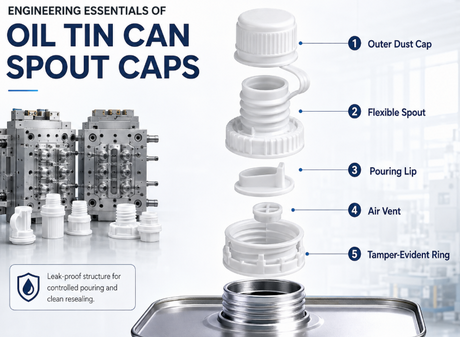
Caps and closures depend on accurate tooling details. Thread cores control thread formation and torque behavior. Neck rings influence fit and sealing. Sealing inserts affect leakage risk. Cavity inserts control shape, appearance and consistency across cavities.
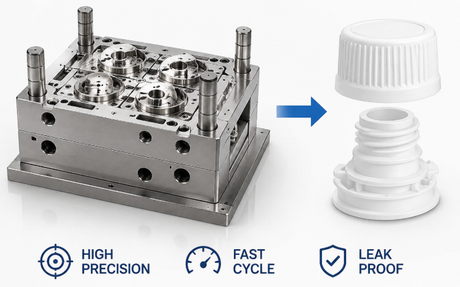
For lightweight caps, leak-proof closures and high-cavitation cap molds, CNC machining accuracy becomes more important because the production window is smaller. Wear or mismatch in one component can create flash, torque variation, sealing instability or repeated cavity defects.
Buyers sourcing cap mold components should review thread geometry, sealing dimensions, surface finish, replacement strategy and inspection requirements before ordering new or spare mold parts.
CNC Machining, EDM, Grinding and Polishing Work Together
TL;DR: CNC machining is often the first controlled process, but many injection mold components also require EDM, wire EDM, grinding or polishing. The correct process route depends on geometry, material, hardness and surface requirements.
Not every injection mold component can be completed by CNC machining alone. Some features may require EDM for sharp internal corners, deep ribs, narrow slots or hardened details. Wire EDM may be used for precision profiles or insert shapes. Grinding may be required for tight flatness, parallelism, diameter control or mating surfaces. Polishing may be needed for release behavior or cosmetic surfaces.
The buyer does not always need to decide the full process route, but the drawing should make the requirement clear. If a feature is a sealing face, sliding surface, shut-off detail or fit-critical diameter, it should be marked correctly so the supplier can choose the correct machining and finishing sequence.
For difficult parts, custom machined mold parts may require a combined route using CNC machining, EDM, grinding, polishing and dimensional inspection.
CNC Machining in Plastic Injection Molding Tooling
TL;DR: CNC machining supports production tooling by preparing mold plates, inserts, pockets, core areas and mold details that affect cycle stability and molded part quality.
For new mold projects, CNC machining supports more than component manufacturing. It also helps build the mold structure required for repeatable production. Plate machining, insert pockets, core seats, runner-related areas, cooling-related features and assembly surfaces all influence how the mold performs during trial and production.
When buyers evaluate plastic injection molding tooling, they should ask how the supplier controls insert fit, critical mold features, parting-line conditions, component replacement and inspection before mold assembly.
A mold is not only designed in CAD. It must be machined, fitted, inspected, tested and maintained. CNC machining is one of the main steps that turns mold design into production-ready tooling.
What Buyers Should Check Before Ordering CNC Machined Mold Parts
TL;DR: A clear RFQ helps the supplier choose the correct machining route and inspection scope. Buyers should send drawings, CAD files, material, critical dimensions, application details and documentation requirements.
Before ordering CNC machined injection mold components, buyers should prepare:
2D drawings with tolerance callouts
3D CAD files
material grade and hardness requirement
surface finish or polishing requirement
coating or heat treatment requirement, if applicable
critical dimensions and datum references
mating-part or assembly relationship
application, such as medical mold, cap mold, closure mold or packaging mold
quantity and expected repeat demand
inspection report requirements
old samples or defect photos for replacement projects
For replacement components, buyers should also clarify whether the part must match a specific cavity, whether manual fitting is acceptable and whether the component is intended to solve a molding defect such as flash, sticking, leakage or dimensional drift.
Common CNC Machining Risks in Injection Mold Components
TL;DR: Many mold problems begin with unclear machining requirements. If critical dimensions, datum references or mating surfaces are not defined, the machined component may not perform correctly inside the mold.
| Risk | Possible Result in Molding | What Buyers Should Check |
|---|---|---|
| Poor insert pocket fit | Flash, mismatch or movement under pressure | Flatness, pocket dimensions, insert seating and shut-off condition |
| Core pin runout or deflection | Uneven wall thickness or off-center internal geometry | Straightness, concentricity, support and mounting reference |
| Thread core variation | Torque variation or unstable assembly fit | Thread profile, surface finish, datum control and inspection method |
| Uncontrolled polishing or finishing | Dimension change, sticking or release problems | Critical surface definition and post-machining inspection |
| Replacement component mismatch | Repeated cavity failure or fitting delay | Cavity ID, old sample, inspection report and matching relationship |
How SENLAN Supports CNC Machined Injection Mold Components
TL;DR: SENLAN supports CNC machined mold component projects by reviewing drawings, component function, material requirements, machining feasibility, inspection needs and replacement consistency before quotation.
SENLAN works with custom mold components and injection mold projects for packaging, caps, closures, cosmetic packaging, medical-related molding and high-cavitation applications. Project review may include part function, machining route, tolerance sensitivity, EDM or grinding feasibility, surface finish, inspection documentation and replacement component requirements.
For new mold components or replacement parts, buyers can send drawings for technical review with 2D drawings, 3D CAD files, material grade, tolerance requirements, quantity, application details and inspection needs.
FAQ: CNC Machining for Injection Mold Components
What CNC machined parts are used in injection molds?
Common CNC machined injection mold parts include core pins, cavity inserts, core inserts, sleeves, thread cores, neck rings, sliders, lifters, stripper inserts, ejector-related components and custom mold plates.
Is CNC machining enough to finish all injection mold components?
Not always. Some mold components also require EDM, wire EDM, grinding, polishing, heat treatment or coating depending on geometry, hardness, surface finish and functional requirements.
Why are CNC machined mold components important for medical molds?
Medical mold components often control thin walls, internal geometry, release behavior and cavity-to-cavity consistency. CNC machining helps prepare the accurate core pins, inserts and sleeves needed for stable medical-related molding.
How does CNC machining affect cap mold components?
CNC machining affects thread core geometry, neck ring accuracy, sealing insert fit and cavity insert consistency. These features can influence cap torque, sealing performance, flash control and long-run production stability.
What should buyers send for CNC machined mold part quotation?
Buyers should send 2D drawings, 3D CAD files, material grade, hardness requirement, tolerance callouts, surface finish, application information, quantity and inspection requirements.
Final Thoughts
CNC machining in injection mold creation is not only about shaping steel. It is about producing mold components that can form, seal, guide, release, align and repeat during real injection molding production.
For buyers sourcing injection mold components, the most important step is to connect each CNC machined part with its function inside the mold. Core pins, cavity inserts, sleeves, thread cores, sealing inserts and replacement components should be reviewed by geometry, material, tolerance, surface finish, inspection and production risk.
A clear drawing package and technical review process help reduce flash, sticking, leakage, wall-thickness variation, fitting problems and replacement mismatch before they become production issues.