Views: 0 Author: Site Editor Publish Time: 2026-03-18 Origin: Site


As global demand for sustainable and cost-effective packaging increases, selecting the right plastic bottle cap mold becomes a strategic decision for B2B procurement managers and factory owners. This article explores how a specialised cap moulding tool influences cycle times, material savings, and overall production efficiency in modern factories.
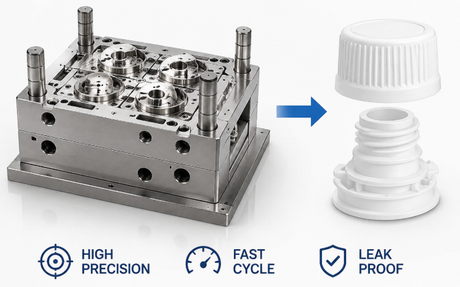
The most efficient cap mould types for high-volume production are multi-cavity injection moulds, hot runner systems, and specialized compression moulding tools. These designs prioritize rapid cooling, minimal waste, and high repeatability to ensure a consistent bottle cap mold output that meets international quality standards.
Understanding the nuances of a custom cap mold is essential for optimizing your supply chain. Whether you are producing standard water bottle closures or complex flip-top caps, the mechanical design of your packaging mold dictates your long-term ROI. By integrating advanced cooling technologies and durable steel grades, manufacturers can significantly reduce the cost per unit while maintaining a competitive edge in the global market.
Types of Cap Moulds Commonly Used in Manufacturing
Factors Influencing the Choice of Cap Mould Types
Comparison of Injection Moulding vs. Blow Moulding for Caps
Advantages of Multi-Cavity Cap Moulds for High Production
Considerations for Material Selection in Cap Mould Design
Innovations in Cap Mould Technology for Efficiency
Maintenance Practices for Prolonging Cap Mould Life
Innovative Blow Moulding Solutions for Aseptic Beverage Bottles: Ensuring Quality and Sustainability
Conclusion

Commonly used types of bottle cap mold include screw cap moulds, flip-top cap moulds, and multi-piece assembly moulds, often utilized within injection or compression molding frameworks.
In the realm of mass production, the plastic bottle cap mold is categorized by its opening mechanism and the complexity of the final product. Screw cap moulds are the industry standard for bottled water and carbonated soft drinks. These tools often incorporate unscrewing mechanisms—either hydraulic or motor-driven—to release the threaded cap without damaging the plastic. A high-quality cap molding tool for screw caps must ensure that the threads are uniform to prevent leakage in the final packaging.
Flip-top cap moulds are more complex, requiring precise hinge design within the custom cap mold. These are widely used in the cosmetic and food industries. The mould must handle the "living hinge" perfectly, ensuring it can withstand thousands of openings without snapping. Advanced packaging mold designs for flip-tops often include "in-mould closing" technology, where the cap is snapped shut before being ejected, saving time in the post-production phase.
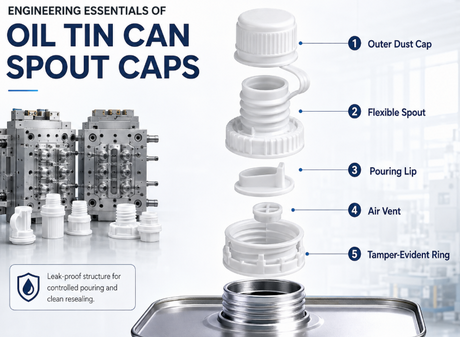
Furthermore, specialized moulds like those for tamper-evident bands or child-resistant closures require intricate sliders and lifters. A bottle cap mold designed for these purposes involves multi-stage ejection systems. Manufacturers often choose between cold runner and hot runner configurations; however, for efficiency, the hot runner plastic bottle cap mold is preferred as it eliminates waste and reduces cycle times by keeping the plastic in a molten state within the manifold.
The choice of a bottle cap mold is primarily influenced by the production volume, the resin material used (such as HDPE or PP), the complexity of the cap design, and the required cycle time for the cap molding tool.
Production volume is perhaps the most critical factor when selecting a custom cap mold. For low-volume or prototype runs, a single-cavity or soft-tool packaging mold might be sufficient. However, for industrial-scale operations, a high-cavity bottle cap mold (ranging from 16 to 96 cavities) is necessary to achieve the desired throughput. The initial investment in a high-cavity plastic bottle cap mold is higher, but the cost per part drops drastically over time.
The choice of material also dictates the cap molding tool design. For instance, High-Density Polyethylene (HDPE) and Polypropylene (PP) have different shrinkage rates and flow characteristics. A custom cap mold must be engineered with precise shrinkage allowances to ensure the cap fits the bottle neck perfectly. If the packaging mold does not account for these variables, the resulting caps may be too loose or too tight, leading to significant quality control failures and wasted resin.
Finally, the complexity of the closure—such as whether it requires a liner or has an integrated seal—affects the bottle cap mold architecture. A simple flat cap is easier to produce than a sports cap with a pull-push valve. The plastic bottle cap mold for complex designs requires advanced venting systems to prevent "short shots" or air bubbles. Efficient cooling channel placement within the cap molding tool is also vital to prevent warping, especially when working with thin-wall designs in high-speed environments.
| Factor | Impact on Mould Selection | Preferred Solution |
| Annual Volume | High volume requires durability | Multi-cavity Hot Runner |
| Material Type | Affects shrinkage and cooling | P20 or S136 Steel |
| Cap Complexity | Dictates ejection method | Stripper plate or Hydraulic unscrewing |
| Budget | Determines automation level | Custom cap mold with integrated sensors |
While injection moulding is the dominant method for creating a bottle cap mold due to its precision, blow moulding is typically reserved for the bottle itself, though some specialized closures use hybrid techniques in a cap molding tool.
Injection moulding for a plastic bottle cap mold offers unparalleled dimensional stability. This process involves forcing molten plastic at high pressure into the custom cap mold cavity. It is the preferred method for the majority of the world's caps because it can produce highly detailed features, such as fine threads and internal seals, which are difficult to achieve with other methods. The packaging mold used in injection moulding is designed to withstand extreme pressures, ensuring that every bottle cap mold cycle produces identical parts.
In contrast, blow moulding is the process of inflating a hot plastic tube (parison) inside a mould cavity. While you wouldn't typically use a blow mould to create a standard screw-on plastic bottle cap mold, the technology is essential for the containers they seal. Some unique packaging designs use "injection-blow" processes where the neck and cap area are injection moulded for precision, and the body is blown. For a standard cap molding tool, injection moulding remains the king of efficiency because it allows for faster cycles and higher cavitation than blow moulding could ever provide for small, solid objects.
When evaluating a custom cap mold for your facility, it is important to understand that injection moulding allows for better wall thickness control. A packaging mold for injection can be tuned to use the absolute minimum amount of plastic required for structural integrity. This "lightweighting" is a major trend in the industry, and a high-end bottle cap mold is the primary tool used to achieve it. In summary, for almost all cap-related needs, the plastic bottle cap mold belongs in an injection moulding machine.
Multi-cavity bottle cap mold systems allow for the simultaneous production of dozens of units in a single cycle, drastically increasing the efficiency of the cap molding tool and lowering labor costs.
The primary advantage of a multi-cavity plastic bottle cap mold is the exponential increase in output. A 48-cavity custom cap mold can produce 48 caps every 5 to 10 seconds. This level of throughput is essential for Tier 1 suppliers in the beverage industry. By using a balanced hot runner system within the packaging mold, manufacturers ensure that each cavity receives the same pressure and temperature, resulting in uniform weight and dimensions across all 48 pieces of the bottle cap mold output.
Efficiency also extends to energy and space. Running one large machine with a 64-cavity plastic bottle cap mold is often more energy-efficient than running four smaller machines with 16-cavity moulds. The cap molding tool in a high-cavity setup is engineered with advanced cooling layouts, often using conformal cooling where the water channels follow the shape of the cap. This allows the custom cap mold to cool down much faster, shaving valuable seconds off the cycle time.
Furthermore, multi-cavity packaging mold designs reduce the amount of waste generated. When paired with a hot runner, there are no "runners" or "sprues" to be recycled, meaning every gram of plastic that enters the bottle cap mold becomes part of a finished product. For a B2B operation, this means less material handling, less regrind, and a cleaner production floor. Investing in a high-cavity plastic bottle cap mold is the most effective way to scale a packaging business.
Reduced cost per part
Lower energy consumption per unit
Faster ROI on the cap molding tool
Consistent quality across large batches
Minimal material waste with hot runner integration
Selecting the right steel for a bottle cap mold is vital, as the plastic bottle cap mold must resist corrosion from resins and the mechanical wear of millions of cycles.
The core and cavity of a custom cap mold are typically made from high-grade stainless steel like S136 or 2316. These materials offer excellent corrosion resistance, which is crucial because many plastics release corrosive gases when heated. A packaging mold that rusts or pits will produce caps with surface defects, leading to rejection by quality control. By using premium steel for the bottle cap mold, manufacturers ensure the tool maintains its high-polish finish over millions of shots.
Hardness is another critical factor for the plastic bottle cap mold. The moving parts of the cap molding tool, such as the unscrewing gears or stripper plates, are subject to constant friction. Using hardened steels (HRC 48-52) prevents premature wear. If the custom cap mold components wear down, the "flash" (excess plastic) will begin to appear on the caps, necessitating expensive repairs. A well-designed packaging mold incorporates interchangeable inserts, allowing for quick replacement of high-wear areas without rebuilding the entire tool.
Additionally, the thermal conductivity of the mould material affects cooling efficiency. Some high-performance bottle cap mold designs use copper alloys (like Beryllium Copper) in the gate areas or the tips of the cores. These alloys move heat away from the plastic much faster than steel, allowing the plastic bottle cap mold to open sooner. While these materials increase the cost of the cap molding tool, the reduction in cycle time usually pays for the investment within a few months of continuous production.
Recent innovations in bottle cap mold technology include high-speed side-entry robotics, integrated sensors for real-time monitoring, and 3D-printed conformal cooling inserts.
Digitalization is transforming the plastic bottle cap mold industry. Modern cap molding tool setups now include "Smart Mould" technology, where sensors are embedded directly into the custom cap mold to monitor cavity pressure and temperature. This data is sent to a central controller, allowing operators to make micro-adjustments to the injection process. This level of control ensures that the packaging mold operates at peak efficiency and can even predict when maintenance is required before a failure occurs.
Another breakthrough is the use of Additive Manufacturing (3D Printing) to create cooling channels in the bottle cap mold. Traditional drilling can only create straight lines, but 3D printing allows for "conformal cooling" channels that curve around the cap's geometry. This ensures uniform cooling for the plastic bottle cap mold, which eliminates warping and allows for even faster cycle times. A cap molding tool equipped with conformal cooling can sometimes reduce cycle times by up to 20%, representing a massive gain in annual productivity.
Robotic integration has also reached new heights. In-mould labeling (IML) and high-speed take-out robots work in perfect synchronization with the custom cap mold. As the packaging mold opens, the robot retrieves the caps and places them directly into a lining machine or a box, reducing human contact and the risk of contamination. This automation is a hallmark of a modern facility using a high-efficiency bottle cap mold to serve the pharmaceutical or food sectors where hygiene is paramount.
Regular maintenance of a bottle cap mold involves cleaning, lubrication, and inspection of the cooling system to ensure the plastic bottle cap mold operates at its original specifications.
Preventative maintenance is the only way to protect your investment in a cap molding tool. After a set number of cycles (often every 24 hours), the custom cap mold should be wiped down to remove any plastic residue or "plate-out." If left uncleaned, this residue can clog the venting of the packaging mold, leading to burn marks on the caps. A clean bottle cap mold produces a better aesthetic finish and reduces the stress on the injection machine.
The cooling system is often the most neglected part of plastic bottle cap mold maintenance. Over time, calcium and mineral deposits can build up inside the water channels of the cap molding tool, acting as insulation and slowing down the cooling process. Periodically flushing the custom cap mold with a descaling agent is essential. If the cooling efficiency drops, the cycle time will inevitably increase, and the packaging mold will lose its competitive edge in production speed.
Finally, lubrication of moving parts like ejector pins and sliders is mandatory. However, in a bottle cap mold used for food packaging, "food-grade" lubricants must be used to prevent contamination. Technicians should also inspect the shut-off surfaces of the plastic bottle cap mold for any signs of "peening" or damage. Catching a small issue early in the cap molding tool prevents a catastrophic failure that could take the custom cap mold out of commission for weeks.
Clean mould faces and vents.
Lubricate all moving slides and pins.
Check for water leaks in the cooling manifold.
Inspect the packaging mold for any stray plastic debris.
Verify that all safety sensors are functional.
While the bottle cap mold handles the closure, innovative blow moulding solutions ensure that the bottle itself is produced with the same level of efficiency and hygiene required for aseptic filling.
In the beverage industry, the bottle and the plastic bottle cap mold must work in perfect harmony. Aseptic production requires that both the container and the cap are free from microorganisms. While the cap molding tool produces the closure, specialized blow moulding machines create the PET bottles in a sterile environment. These systems often utilize dry sterilization or UV light to ensure the custom cap mold output and the bottle remain uncontaminated throughout the filling process.
Sustainability is another driving force in both packaging mold design and blow moulding. Manufacturers are now looking for ways to use 100% rPET (recycled PET) for bottles and more sustainable resins for the bottle cap mold. This requires the plastic bottle cap mold to be highly adaptable, as recycled materials can have different flow properties. A high-quality cap molding tool must be able to process these variations without sacrificing the precision of the seal or the strength of the tamper-evident band.
Lastly, the integration of blow moulding and cap application is becoming more seamless. "Combi" blocks combine the blow moulding, filling, and capping (from the custom cap mold) into a single enclosed unit. This reduces the footprint of the factory and minimizes the risk of the packaging mold product being exposed to air before the bottle is sealed. By focusing on both the bottle cap mold and the blow moulding process, manufacturers can guarantee a high-quality, sustainable, and safe product for the end consumer.
Selecting the right bottle cap mold is a foundational step in building an efficient B2B production line. From the initial design of a plastic bottle cap mold to the technical execution of a cap molding tool, every detail matters. By investing in a custom cap mold that utilizes high-grade materials and innovative cooling technologies, factories can achieve higher throughput, lower waste, and superior product quality.
As we have seen, the packaging mold industry is moving toward greater automation and sustainability. Whether you are upgrading an existing facility or starting a new project, understanding the advantages of multi-cavity systems and the importance of rigorous maintenance will ensure your bottle cap mold remains a profitable asset for years to come. For those seeking the highest efficiency, the path forward involves embracing smart technology and specialized designs that push the boundaries of what a plastic bottle cap mold can achieve.