Views: 0 Author: Site Editor Publish Time: 2026-04-24 Origin: Site


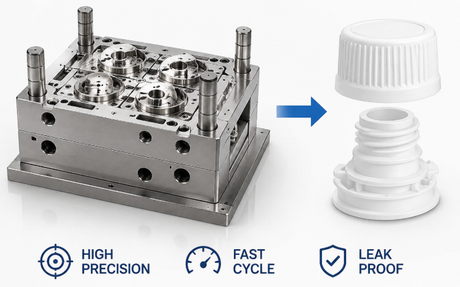
At SENLAN, we define a precision spout cap mold as a mold that can keep thread feel, sealing contact, and cavity-to-cavity performance stable through repeat production.
For buyers working on refill packaging, doypack closures, cosmetic refill pouches, or spouted pouch applications, a spout cap mold should not be specified by cavity count alone. A reliable tooling decision usually depends on how well five factors work together:
A good custom spout cap mold is not just built to make samples. It is built to support stable sealing, repeatable torque feel, and long-term production consistency.
For a direct product overview, you can also review our custom spout cap mold for spouted pouches and refill packaging.
A precision spout cap mold is not defined by cavity count alone. It is defined by whether all cavities can hold stable sealing, thread engagement, and user feel through repeat production.
| Tooling Factor | What Buyers Should Check | Why It Matters |
|---|---|---|
| Cavities | Output target vs cavity-to-cavity consistency | More cavities increase output, but also increase sealing and thread-balance risk. |
| Hot Runner | Thermal balance, gate location, gate vestige, maintenance complexity | A hot runner can improve cycle time, but only when designed around the closure structure. |
| Resin | PP, PE, mono-material, food-contact requirement | Resin affects shrinkage, stiffness, sealing feel, and recyclability. |
| Neck Size | 28mm, 33mm, or fully custom | Standard sizes reduce uncertainty, while custom geometry needs deeper DFM. |
| DFM | Cap-fitment matching, sealing land, venting, cooling, gate vestige | Weak DFM can turn a good quote into an expensive correction project. |
| Steel & Hardness | Wear zones, thread cores, cavity inserts, replaceable parts | Mold life depends on steel strategy, not just a headline hardness number. |
| Validation | CMM inspection, Cpk target, sample testing | Real stability should be verified by data, not only visual samples. |
Many buyers want a multi-cavity spout cap mold because the output target is clear. But every added cavity increases the difficulty of keeping thread feel, sealing contact, and closing torque consistent.
A mold that makes one good cap is not the same as a mold that keeps 16 or 32 cavities stable.
For multi-cavity production, buyers should pay close attention to:
Achieving this consistency requires more than good steel. The thread cores, sealing inserts, and cavity inserts must be machined with strict interchangeability. By validating critical dimensions with ZEISS CMM metrology, the supplier can confirm whether each cavity remains within the intended tolerance window before production approval.
Where required, buyers can also request Cpk validation on critical sealing lands or fit-critical thread features. For high-volume packaging projects, a Cpk target such as ≥ 1.33 is often used as a practical benchmark for process capability, but the exact requirement should be agreed based on the product risk and validation standard.
Multi-cavity success is not only about output. It is about whether every cavity can maintain sealing pressure, thread feel, and fit consistency over long-run production.
For more context on machining and inspection capability, see our technical advantages.
A hot runner spout cap mold can support faster cycles, cleaner filling, and lower runner waste. But it is not automatically the right choice for every project.
A hot runner system makes more sense when:
A hot runner may add less value when:
The important question is not simply “Do you use a hot runner?” The better question is:
How does the hot runner design improve this specific spout cap mold in terms of filling balance, gate quality, cycle time, and maintenance risk?
For spout caps and fitments, hot runner layout must be reviewed together with gate position, sealing face protection, and cosmetic surface expectations.
A PP PE spout cap mold discussion should not be limited to resin price. Resin choice affects how the closure behaves in real use.
Material selection can influence:
PP and PE can behave differently in stiffness, shrinkage, and user feel. For closures, this can affect thread engagement, sealing response, and how the cap feels during repeated opening and closing.
When buyers ask about a recyclable spout cap mold or mono-material spout cap mold, the project may become more restrictive. Mono-material packaging can support sustainability goals, but it may also reduce design freedom.
This can make the mold more sensitive to:
If the project involves a food grade spout cap mold or BPA free spout cap mold, the safer engineering language is not “the mold is FDA approved.” A mold itself is not usually the regulated finished article.
A better way to evaluate the project is:
For food-contact or BPA-free packaging, compliance depends on resin selection, end-use conditions, and target-market requirements — not the mold alone.
Keywords like 28mm spout cap mold and 33mm spout fitment mold matter because neck size affects project uncertainty.
A 28mm or 33mm structure may offer:
But “standard size” does not mean “no risk.” Even standard dimensions still need to be reviewed around sealing land, thread engagement, and shrinkage behavior.
A custom spout cap mold is usually needed when:
Custom geometry usually requires deeper DFM, stronger validation, and more cap-fitment review.
Standard spout sizes reduce early uncertainty, while custom spout cap molds require deeper DFM and more complete validation before tooling release.
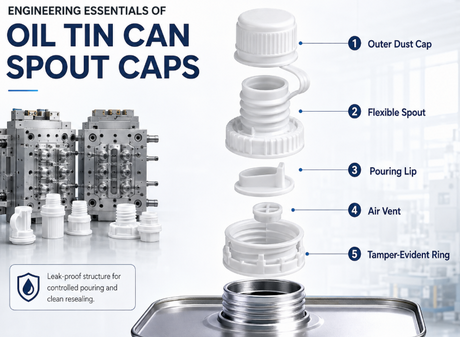
If you are still defining the fitment structure, this article on what a spout fitment is in flexible packaging may help clarify the basic closure system.
A strong spout fitment mold DFM analysis should not stop at basic moldability. It should explain how the closure will work as a real production system.
For a spout cap or fitment project, DFM should cover:
This is especially important for OEM spout fitment mold China projects, where the buyer may expect more than mold manufacturing. OEM support should include design review, manufacturability feedback, and risk identification before steel is cut.
A useful DFM review should answer questions such as:
A useful spout-fitment DFM analysis should explain how thread, sealing, gate vestige, cooling, venting, and maintenance strategy affect real production — not only whether the part can be molded once.
If your team is comparing China-based suppliers, our guide on how to source a spout fitment mold from China can support the RFQ preparation stage.
Buyers often see phrases like spout cap mold HRC52 steel or spout cap mold long service life. These claims only matter when they are tied to real tool strategy.
A mold does not become long-life because a website says so. It becomes long-life because the tooling plan is built around wear, maintenance, and replacement logic.
A reliable long-life mold strategy should consider:
For some wear-prone areas, harder steel or localized insert strategy may be necessary. But the best choice depends on the resin, cavity count, expected output, and mold architecture.
The better buyer question is not:
“Do you use HRC52 steel?”
The better question is:
Which areas require higher wear resistance, which areas should remain replaceable, and how will the mold maintain sealing and thread consistency after long production?
Long mold life in a spout cap mold depends on steel selection, wear-zone strategy, replaceable inserts, and maintenance access — not on one hardness number alone.
If you want a realistic quotation for a precision spout cap mold, prepare more than a product photo.
A useful RFQ package should include:
The more clearly the project is defined, the more useful the DFM, lead-time estimate, and tooling proposal will be.
For cosmetic refill applications, this cosmetic refill pouch spout cap and fitment mold application case shows why matching review and production logic matter before tooling is finalized.
Before approving a custom spout cap mold, ask:
A good spout cap mold should not be specified by one variable alone.
Not by cavities alone.
Not by resin alone.
Not by steel alone.
And not by price alone.
The better tooling decision comes from understanding how these factors work together:
That is what helps a precision spout cap mold move from a good sample to stable production.
PP and PE behave differently in stiffness, shrinkage, and sealing feel. The better choice depends on the closure structure, product contents, sealing target, and whether the packaging system prioritizes rigidity, flexibility, recyclability, or user feel.
There is no single best steel for every spout cap mold. The right choice depends on resin, cavity count, expected output, wear zones, and maintenance strategy. For high-volume production, thread cores, sealing inserts, and shut-off areas often need stronger wear resistance and replaceable design.
Not always. A hot runner can improve balance, reduce waste, and support shorter cycle time, but it also adds system complexity. The decision should be based on cavity count, gate location, part geometry, and maintenance requirements.
Yes, the mold can be designed for food-contact or BPA-free packaging applications, but compliance depends on the selected resin, final application, and target-market regulatory requirements. The material and finished packaging system must be verified through the correct compliance path.
A useful DFM report should include cap-fitment matching, sealing surface review, thread engagement, gate vestige analysis, cooling channel optimization, venting strategy, shrinkage compensation, ejection review, and maintenance planning for wear-prone components.
#SpoutCapMold #MultiCavitySpoutCapMold #HotRunnerSpoutCapMold #PPPEClosure #SpoutFitmentMold #CustomSpoutCapMold #PrecisionSpoutCapMold #DFMAnalysis #MoldSteel #LongServiceLife #FoodGradePackaging #MonoMaterialPackaging #RecyclablePackaging #CapFitmentMatching