Views: 0 Author: Site Editor Publish Time: 2026-08-01 Origin: Site


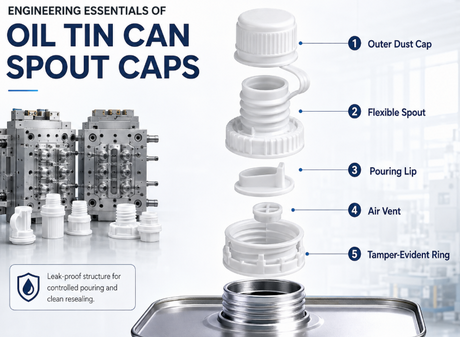
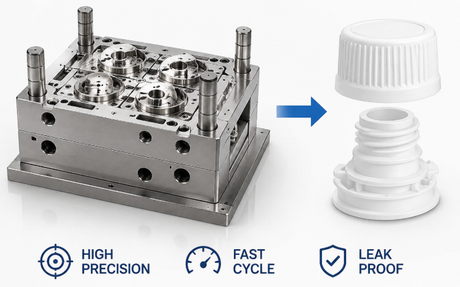
A sport cap mould is a multi-cavity precision injection molding system composed of eight essential structural and functional component groups: the hot runner manifold and precision valve gate system, core and cavity steel inserts engineered with high-hardness corrosion-resistant alloys, multi-stage mechanical collapsing cores or unscrewing hydraulic mechanisms for internal thread forming, specialized angled slider cores for hinged flip-top caps, continuous conformal cooling channels, multi-ejection air poppet and stripper plate assemblies, precision guided alignment pillars with taper locks, and wear-resistant guide bushing plates. Together, these engineered components facilitate high-speed, zero-defect production of multi-piece or hinged sport cap mould closures with high cycle repeatability and microscopic tolerance control.
Section | Summary |
Introduction to Sport Cap Mould Tooling Architecture | An overview of the engineering complexity, multi-cavity layouts, and high-precision mechanical requirements of sport cap mould tooling systems. |
Hot Runner System and Valve Gate Assemblies | Detailed analysis of balanced hot runner manifolds, heated nozzles, and valve gating essential for clean vestige and balanced melt delivery. |
Core and Cavity Steel Inserts and Metallurgy | Examination of high-grade tool steel selection, mirror polishing, corrosion resistance, and thermal conductivity requirements. |
Thread-Forming and Unscrewing Mechanisms | Technical breakdown of collapsing cores, hydraulic rack-and-pinion unscrewing systems, and internal thread release kinematics. |
Flip-Top Hinge and Slider Side-Action Components | Detailed review of angled lifters, mechanical sliders, and split-cavity blocks designed to form integrated butterfly hinges and spout latches. |
Conformal Cooling Channels and Thermal Management | Analysis of 3D-printed additive conformal cooling loops, beryllium-copper inserts, and rapid heat dissipation strategies for cycle time reduction. |
Ejection Systems and Air-Assist Stripper Plates | Overview of synchronized mechanical stripper plates, pneumatic air valves, and controlled ejection sequences preventing part deformation. |
Mold Alignment, Venting, and Structural Mold Base | In-depth look at heavy-duty mold bases, micro-venting slots, tapered side locks, and interlocking guide pins for long-term precision. |
Technical Maintenance Guidelines and Tooling Optimization | Best practices for preventive maintenance, ultrasonic cleaning, lubrication schedules, and field troubleshooting for continuous operations. |

Sport cap mould tooling architecture represents the pinnacle of high-speed, multi-cavity injection mold engineering designed for complex liquid dispensing closures.
Modern functional closures, especially those utilized in athletic hydration, functional beverages, and squeezable liquid foods, demand exceptional dimensional consistency and structural integrity. A sport cap mould must simultaneously form intricate internal threads, leak-proof sealing lip profiles, ergonomic pull-spouts, and tamper-evident bands while operating at cycle times under six seconds. Achieving this efficiency requires an intricately balanced steel architecture that manages extreme melt pressures, rapid thermal exchange, and continuous high-frequency mechanical movements across millions of cycles.
The overall structural layout of a sport cap mould relies on a heavy-duty, multi-plate chassis configured with high-cavitation arrangements, such as 16, 32, 48, or 64 cavities. Each cavity functions as an independent micro-environment where plastic resin, typically high-density polyethylene or polypropylene, is injected at high pressures. To ensure seamless operation, the tooling integrates high-precision guiding mechanisms that prevent radial misalignment between the core and cavity halves down to sub-micron tolerances, eliminating flash formation along critical sealing zones.
Furthermore, contemporary manufacturing requirements demand flexible production systems that can handle custom spout geometry and varying neck finish dimensions. Tooling engineers frequently integrate modular, interchangeable cavity inserts into standardized mold bases. Industrial brand owners seeking custom packaging solutions often specify specialized configurations, such as a high-efficiency spout cap mold tailored for refillable pouch fitments, to guarantee absolute leak tightness and uniform burst strength across varying environmental temperatures.
The hot runner system and valve gate assembly deliver thermally homogeneous molten polymer directly into each cavity without generating runner waste or gate vestige.
In high-cavitation sport cap mould operations, natural thermal balance across the runner manifold is critical. Melted polymer must travel an identical distance and experience identical pressure drops and shear histories from the machine nozzle to every individual cavity gate. Hot runner manifolds engineered for sport cap mould tooling utilize internal smooth-bore flow channels with zero sharp angles or dead zones, preventing material stagnation, thermal degradation, and color-change delays during production runs.
Valve gate technology represents the industry standard for sport cap mould systems. Pneumatically or hydraulically actuated valve pins physically open during the injection phase and seal flush against the orifice prior to mold opening. This mechanical sealing eliminates stringing, drooling, and protruding gate remnants, creating a smooth surface finish essential for the top seal plane of a sport spout or liquid pouch fitment. The valve needles are crafted from hardened high-speed steels or titanium alloys, often featuring low-friction coatings to resist wear under abrasive resin flow.
Thermal control within the hot runner system is maintained using localized cartridge heaters and independent thermocouples assigned to each nozzle tip. Precise temperature control within a strict window prevents localized overheating, which causes resin degradation, and cold spots, which induce short shots or internal stress concentrations in the molded closure.
Component Name | Primary Material | Functional Role | Critical Design Parameters |
Hot Runner Manifold | 1.2344 / H13 Tool Steel | Distributes resin uniformly from machine to cavities | Naturally balanced 3D flow channels, polished bores |
Valve Gate Nozzle Tip | Beryllium Copper / Titanium Alloy | Transfers heat rapidly to gate land area | High thermal conductivity, micro-finished tip radius |
Valve Pin / Needle | M2 High-Speed Steel + TiN Coating | Mechanically closes gate orifice post-injection | H7/g6 clearance fit, mirror polish, 60+ HRC hardness |
Actuation Cylinder Assembly | Anodized Aluminum / Stainless Steel | Drives valve pin stroke pneumatically or hydraulically | High-temperature seals, synchronized multi-pin stroke |
Core and cavity steel inserts form the shaping boundary of the closure, requiring supreme hardness, superior polishability, and excellent thermal transfer properties.
The cavity inserts define the external cosmetic appearance, brand logos, grip knurls, and hinge geometry of the sport cap, while the core inserts form the inner thread geometry, plug seal sleeves, and internal liquid flow passages. Because sport cap mould components undergo millions of injection and ejection cycles annually under clamping pressures exceeding hundreds of tons, selecting the optimal metallurgical composition is foundational to tool life and dimensional control.
Premium tool steels such as AISI S136, Stavax ESR, or 1.2083 vacuum-remelted stainless steel are standard for sport cap mould inserts. These materials offer high chrome content for superior corrosion resistance against aggressive additives or masterbatch pigments, along with excellent polishability up to SPI A1 mirror finish. High cavity surface polish ensures smooth part release and prevents cosmetic surface drag marks. High wear resistance is achieved through controlled heat treatment processes, hardening the insert steels to 52–54 HRC.
In addition to steel selection, surface engineering coatings play a major role in sport cap mould component longevity. Titanium Nitride, Diamond-Like Carbon, and Chromium Nitride coatings applied via Physical Vapor Deposition significantly lower friction coefficients on sliding core surfaces, reduce resin sticking, and protect fine sharp corners on thread profiles from micro-chipping over extended production campaigns.
Tooling Zone | Recommended Material | Hardness Range | Surface Treatment / Finish |
Cavity Plate Insert | AISI S136 / Stavax ESR | 50 - 54 HRC | SPI A1 Mirror Polish, PVD CrN Coating |
Core Shank Insert | 1.2343 / H13 Steel | 52 - 56 HRC | PTFE Nickel Plating, Machined Texture |
Spout Pin Core | Ampcoloy 940 (CuNiBe) | 28 - 32 HRC | Micro-polished, High Conductivity Finish |
Thread Core Insert | 1.2083 Stainless Steel | 52 - 54 HRC | Low-friction DLC (Diamond-Like Carbon) Coating |
Thread-forming and unscrewing mechanisms release internal threads and continuous retaining lip features without stripping plastic geometry during ejection.
Sport caps require secure threaded attachment to bottle necks or flexible pouch fitments to withstand internal pressure and transport stresses. Depending on cap thread design—continuous, interrupted, or multi-start—the sport cap mould must integrate dynamic mechanical actuation to release the molded thread before part ejection. Two main mechanical engineering methods are utilized: dynamic unscrewing gear networks and expanding/collapsing core assemblies.
Dynamic unscrewing systems employ precision ground rack-and-pinion drives, hydraulic motors, or servo-driven ball screws embedded within the mold base. As the mold opens, the drive system rotates the internal core inserts while an ejection stripper plate advances at a matching pitch. This synchronized helical movement unscrews the core pin from the cap without causing mechanical deformation or thread wiping. High-precision sport cap mould designs utilize closed-loop servo motors to control rotation timing and angular orientation down to fractions of a degree.
For caps with interrupted threads or segmented internal retaining ridges, mechanical collapsing cores offer a faster alternative. A central center pin retracts during mold opening, allowing outer core segments to collapse inward radially. This inward collapse clears the internal thread crest depth, allowing the part to be stripped forward linearly without rotation. Collapsing cores eliminate rotation mechanics, reducing total cycle times by up to 25 percent.
Flip-top hinge and slider side-action components form complex undercut features, butterfly spring hinges, and ergonomic thumb latches using synchronized mechanical movements.
Single-piece flip-top sport caps feature an integrated living hinge connecting the base closure body to the sealing lid cover. Creating this thin flexural web along with functional side undercuts requires complex side-action slider blocks and angled lifter mechanisms within the sport cap mould cavity plate. These mechanical elements move perpendicular or at an angle to the main mold opening direction to release undercut plastic geometry.
Mechanical sliders are driven by heavy-duty angled guide pins during the mold opening stroke. As the core plate moves backward, the angle pin forces the slider assembly outward along hardened wear plates. Precision mechanical heel blocks securely lock the sliders in place during high-pressure resin injection, preventing mold flash along the parting line. For complex flip-top caps with deep undercuts, hydraulic cylinders or pneumatic compact actuators drive the slider side-actions independently, allowing precise timing before mold separation.
Creating reliable, long-lasting living hinges requires high precision in hinge pocket tooling dimensions. The steel gap forming the living hinge is often only 0.25 mm to 0.35 mm thick. The core and cavity inserts at this junction must feature exceptional dimensional control and mirror polishing to enable laminar polymer flow, eliminating weld lines that could cause hinge fatigue failure during usage. Manufacturers specializing in flexible packaging frequently source specialized tooling such as a custom spout cap mold for refillable packaging to maintain high structural integrity across high-speed lid closing steps.
Mechanical Sub-Component | Primary Function | Operational Kinematics | Key Maintenance Point |
Angle Pin (Horn Pin) | Drives side slider laterally during mold stroke | Sliding contact at 15 to 25-degree incline | Inspect for wear and apply high-pressure grease |
Slider Body Block | Forms external undercut, hinge flex, and latch | Moves along hardened wear plates in cavity | Check gib alignment and stroke limit stops |
Locking Heel Block | Supports back of slider against injection force | Pre-loaded contact wedge face when closed | Maintain proper contact face angle matching slider |
Angled Lifter Core | Releases internal undercuts during ejection | Translates upward and laterally on angled guide rod | Monitor spherical joint connection for play |
Conformal cooling channels follow the three-dimensional geometry of the cap cavity, dissipating heat evenly to maximize cycle efficiency and prevent warpage.
Thermal management is the single most critical factor in controlling cycle times and dimensional stability in high-cavitation sport cap mould operations. Polymer cooling accounts for over 60 percent of the total injection cycle time. Traditional straight-drilled cooling channels cannot access curved geometry, deep spout cores, or internal thread zones, leading to localized heat accumulation, uneven shrinkage, ovality deformation, and extended cycle times.
Modern sport cap mould tooling utilizes 3D-printed additive manufacturing technology to incorporate conformal cooling channels into cavity and core inserts. Direct Metal Laser Sintering creates smooth, curved cooling paths within millimeters of the mold surface, matching the contours of the spout tip, thread profile, and outer wall. Combined with high-flow water temperature control units operating at high turbulent flow rates, conformal cooling reduces core temperatures rapidly and evenly.
In narrow spout core pins where internal conformal water channels are limited by physical space, high-thermal-conductivity copper alloys are utilized. Beryllium copper and copper-nickel-silicon alloys transfer heat away from the core tip up to four times faster than standard stainless steels. Press-fit copper cores or internal baffle tube circuits ensure rapid heat extraction from deep blind cores, eliminating sink marks and internal stress defects.
Thermal Efficiency Principle: Maintaining turbulent cooling water flow (Reynolds number above 4,000) within 3D conformal channels reduces thermal resistance at the steel boundary, lowering part cycle times by 15 to 30 percent while preventing cap ovality out-of-roundness.
Ejection systems combine mechanical stripper plates and pneumatic air-assist valves to release delicate sport cap structures cleanly without causing cosmetic marks.
Once the polymer has cooled below its heat deflection temperature, the sport cap mould must release the molded part instantly without distorting delicate sealing lips, tamper-evident bands, or living hinges. Standard ejector pins are rarely sufficient for sport caps because localized pin pressure can pierce thin walls or leave visible cosmetic blemishes on functional sealing surfaces. Instead, sport cap mould tooling relies on mechanical stripper plates and integrated air-assist valves.
A stripper plate is a full-coverage, hardened steel plate contoured to match the perimeter edge of the cap. Driven by mechanical ejector rods or double-acting hydraulic cylinders, the stripper plate advances forward, contacting the entire lower rim of the cap simultaneously. This uniform push force strips the closure smoothly off the inner core pin without tilting or localized stress concentration. Stripper plate surfaces are precision ground to maintain tight sliding clearances with core shanks, preventing flash penetration.
To eliminate vacuum pressure created between the inner core and the cap during rapid forward ejection, air poppet valves are integrated into the core tips. Compressed air is injected through micro-clearance poppet valves simultaneously with the forward stroke of the stripper plate. This cushion of air breaks the vacuum seal, floating the part off the core smoothly and accelerating gravity or robot-assisted part collection.
Ejection Element | Actuation Method | Primary Benefit | Target Application Zone |
Full-Coverage Stripper Plate | Machine Ejector Rods / Hydraulics | Applies 360-degree force to cap base rim | Main body thread core release |
Pneumatic Air Poppet Valve | Solenoid Air Impulse (6-8 bar) | Breaks internal core vacuum instantantly | Deep spout tip and inner plug seal core |
Dual-Stage Ejection Plate | Sequenced Mechanical Latch Locks | Staggers thread release and spout ejection | Complex 2-piece integrated sport caps |
Ejector Sleeve Assembly | Guided Ejection Knockout Bars | Uniform push on small concentric details | Tamper-evident band retaining rings |
The structural mold base provides mechanical rigidity, sub-micron cavity alignment, and micro-venting to prevent burn marks and flash formation.
The structural foundation of a high-cavitation sport cap mould is a heavy-duty, stress-relieved steel mold base typically manufactured from P20, 1.2311, or 1.2312 pre-hardened plate steel. The mold base must withstand clamping forces ranging from 200 to 500 metric tons without flexing or shifting. Flexure causes microscopic plate deflection during high-pressure injection, resulting in parting line flash, uneven wall thickness, and accelerated tool wear.
To maintain registration between the stationary side and moving side down to sub-micron accuracy, sport cap mould bases utilize four-corner precision guided leader pins with self-lubricating bronze bushings, complemented by heavy-duty side taper locks. Tapered interlocking blocks mounted on all four sides of the mold plates engage prior to core and cavity entry, absorbing side loads generated during asymmetric resin flow or multi-slider movement.
Air venting is another critical element built into the cavity parting lines and core pins. As molten plastic fills the cavity at high speeds, trapped air must escape instantly. Without adequate venting, trapped gas compresses, causing heat-induced burn marks, short shots, or weak weld lines. Micro-venting channels in a sport cap mould are ground to depths of 0.015 mm to 0.025 mm, allowing air to vent freely while preventing plastic resin from leaking and creating flash. Procurement teams specifying tooling for high-speed automated packaging lines often require specialized implementations, including a dedicated spout cap mold for spouted pouches with tight-tolerance venting to ensure zero leakage on high-speed liquid filling lines.
A preventive maintenance program preserves precision tolerances, prevents premature component wear, and maximizes operational uptime.
High-cavitation sport cap mould systems operate under continuous mechanical stress. Implementing a structured maintenance program ensures high production efficiency across millions of cycles.
Daily Inspection and Cleaning Protocol
At the end of every production shift, wipe down cavity parting surfaces, slider guide tracks, and leader pins with clean micro-fiber cloths and non-corrosive solvent. Inspect micro-venting slots for resin residue accumulation, which restricts air release and leads to localized gas burning. Clean gas residue using soft brass scrapers or specialized aerosol cleaners, avoiding abrasive tools that can damage polished steel edges.
Lubrication and Wear Plate Management
Apply high-temperature, non-bleeding synthetic greases to angle pins, slider gibs, and mechanical ejection guides. Avoid over-greasing near cavity inserts, as lubricant migration into the mold cavity causes part contamination, surface staining, and stress cracking in polyolefin caps. Routinely inspect bronze wear plates and DLC-coated guide elements for signs of scoring or uneven wear patterns.
Hot Runner System Calibration and Care
Continuously monitor hot runner thermocouple readings for heating variances. Perform periodic resistance checks on heater bands to detect degradation before heater failure occurs. During production stoppages, implement purge routines using thermal-stable purging compounds to clear colorants and prevent carbonization inside flow channels.
Ultrasonic Cleaning and Conformal Channel De-scaling
Periodically disassemble core and cavity insert blocks for deep cleaning in ultrasonic solvent baths to remove stubborn additive buildup. Flush internal conformal cooling loops with mild acid de-scaling solutions to clear lime scale, rust, and mineral deposits, ensuring maximum heat transfer efficiency and uniform thermal performance.
Maintenance Tip: Implement a digital mold-cycle counter and automated preventive maintenance alerts every 250,000 cycles to inspect valve gate needle wear, replace pneumatic seals, and recalibrate unscrewing servo motor positions before mechanical drift causes part dimensional drift.
A sport cap mould is an advanced, highly integrated manufacturing system where hot runner thermodynamics, precision metallurgy, multi-axis mechanical side-actions, rapid thermal cooling loops, and high-speed ejection components work in precise synchrony. Every individual component, from the valve gate needle in the hot runner system to the 3D conformal cooling channels and dynamic unscrewing mechanics, plays an essential role in defining part quality, dimensional stability, and production cycle times. By understanding these core components, selecting high-grade materials, and applying strict maintenance protocols, high-volume closure manufacturers can achieve reliable, zero-defect production that meets demanding global liquid packaging standards.